
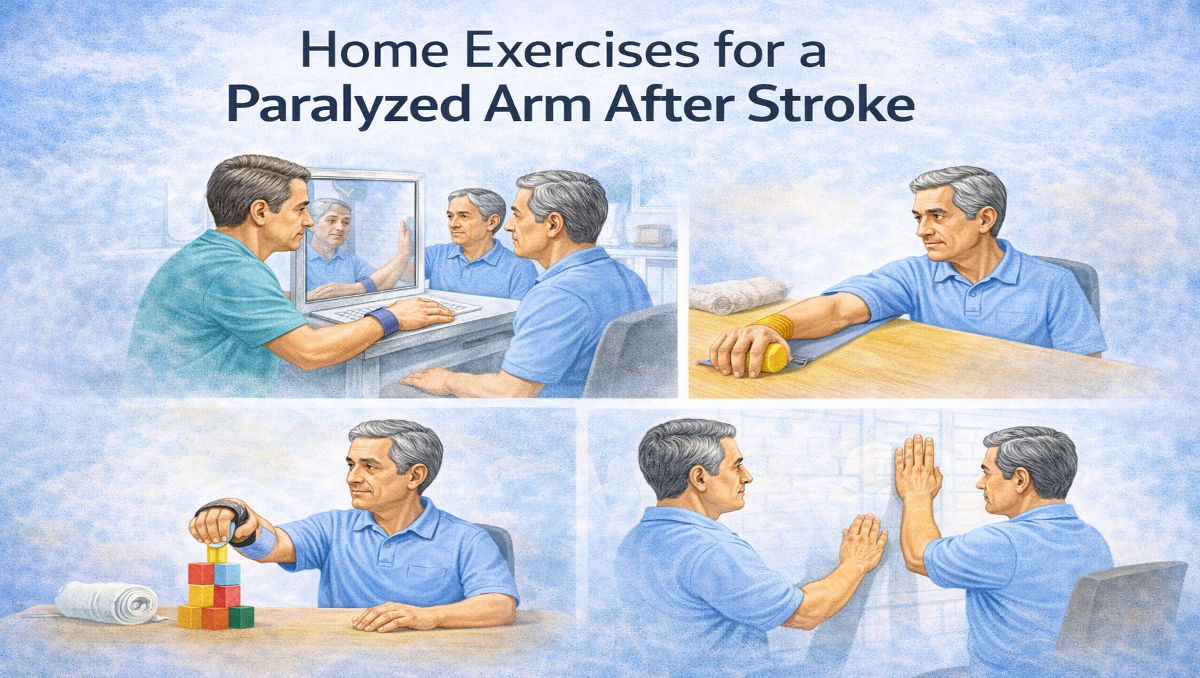
7 Proven Home Exercises for a Paralyzed Arm After Stroke 2026
When Your Arm Won’t Move — And You Don’t Know What Comes Next
The hospital room feels quiet.
You look at your arm and tell it to move. Nothing happens.
It feels heavy. Foreign. Unfamiliar.
Just days ago, you were living normally. Now even lifting a spoon feels impossible.
If you’re searching for the best home exercises for a paralyzed arm after stroke, you’re likely looking for something more than instructions. You’re looking for hope and a clear path forward.
This guide gives you both.
Do Home Exercises for a Paralyzed Arm After Stroke Really Help?
Yes. Structured and consistent home exercises for a paralyzed arm after stroke can significantly improve strength, coordination, and functional use of the arm. Repetitive movement stimulates neuroplasticity , the brain’s ability to form new neural pathways after injury. When combined with professional therapy, daily stroke arm recovery exercises at home play a crucial role in restoring mobility and independence.
Most improvement occurs in the first 3–6 months, but recovery can continue beyond a year with persistent practice.
Stroke in the United States: Why Early Arm Recovery Matters
According to the American Stroke Association, a stroke occurs every 40 seconds in the United States. Arm weakness or paralysis is one of the most common long-term effects.
According to the American Stroke Association, stroke remains a leading cause of long-term disability in America.
Early rehabilitation improves outcomes. That includes professional therapy and carefully performed home exercises for a paralyzed arm after stroke.
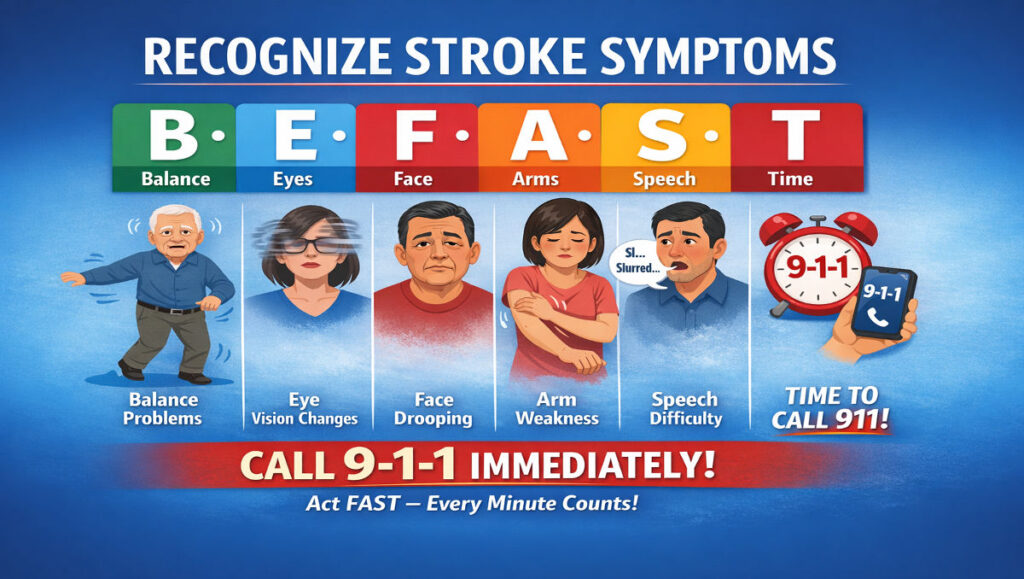
Recognize Stroke Symptoms: BE FAST
What Happens to the Arm After a Stroke?
Arm paralysis often follows stages:
- Flaccid phase: The arm feels limp and weak.
- Spastic phase: Muscles may become tight or stiff.
- Coordination phase: Movement slowly begins returning.
The Mayo Clinic explains that recovery depends on stroke severity, location, and rehabilitation intensity.
Think of the brain like a circuit board. When part of it is damaged, signals to the arm are disrupted. Repetition through stroke arm rehabilitation exercises helps the brain build alternative pathways.
Clinical guidance from the Mayo Clinic explains that early rehabilitation significantly improves motor outcomes.
7 Best Home Exercises for a Paralyzed Arm After Stroke
These evidence-based home exercises for a paralyzed arm after stroke are commonly recommended in U.S. rehabilitation programs. Perform gently and consistently.
1. Passive Range of Motion (For Severe Paralysis)
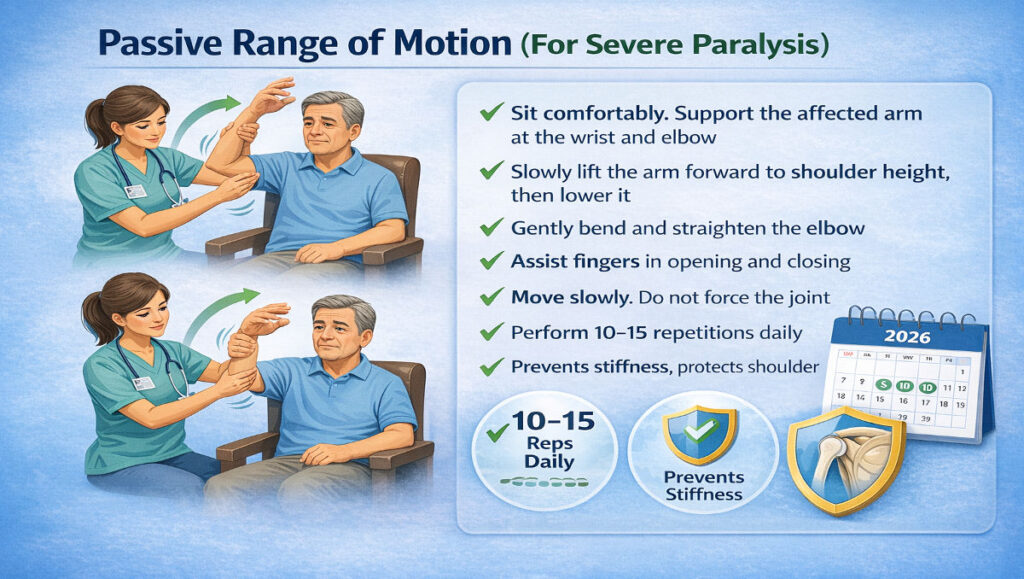
This is the foundation of early stroke arm recovery exercises.
Sit comfortably. Support the affected arm at the wrist and elbow with your stronger hand. Slowly lift the arm forward to shoulder height, then lower it. Gently bend and straighten the elbow. Assist fingers in opening and closing.
Move slowly. Do not force the joint.
Perform 10–15 repetitions daily.
This prevents stiffness and protects the shoulder.
2. Table Slide Exercise
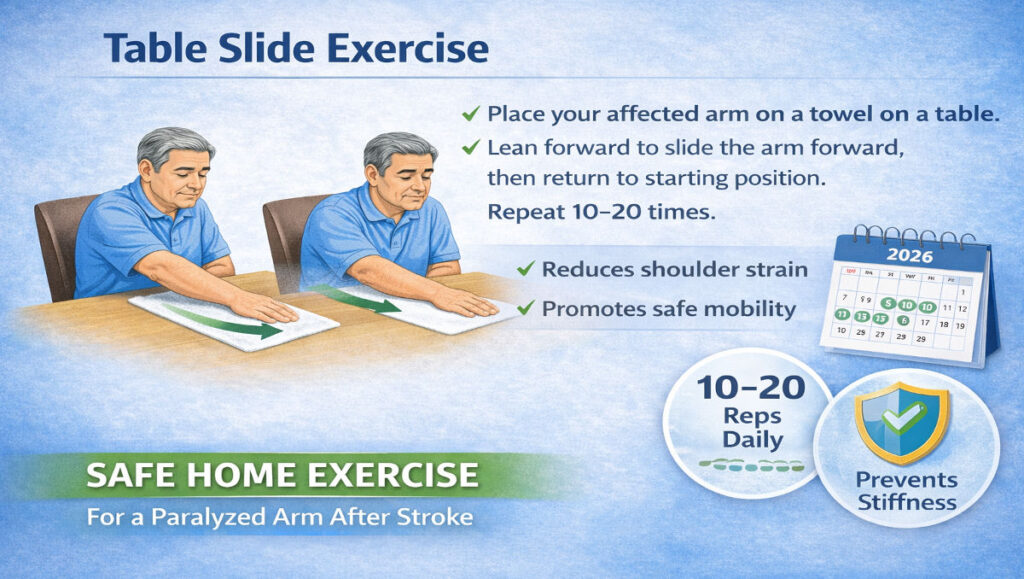
Place your affected arm on a towel on a table.
Lean forward slightly to slide the arm forward, then return to starting position. Keep the movement controlled and smooth.
Repeat 10–20 times.
Table slides are among the safest home exercises for a paralyzed arm after stroke because they reduce shoulder strain while promoting mobility.
3. Assisted Shoulder Flexion
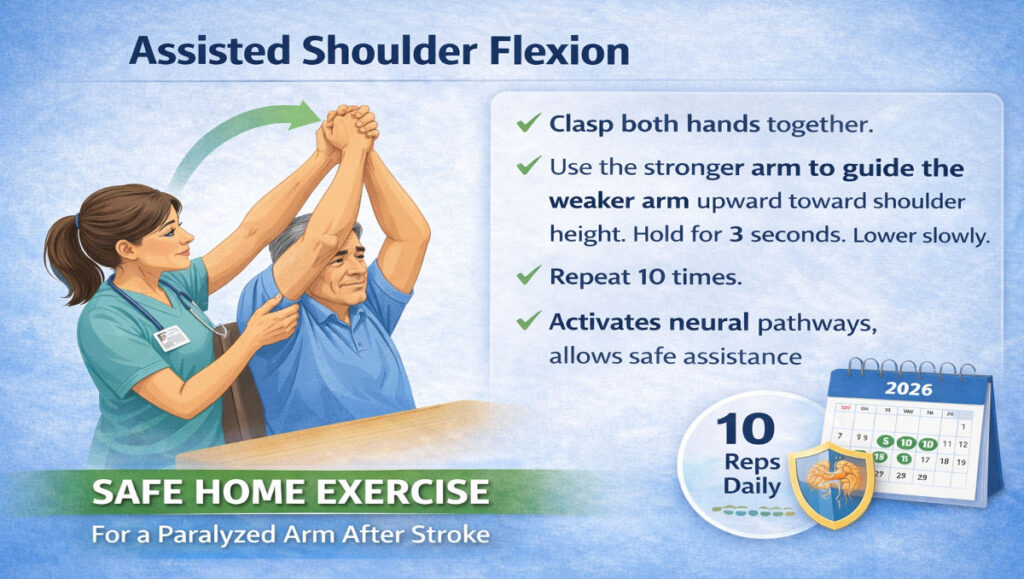
Clasp both hands together.
Use the stronger arm to guide the weaker arm upward toward shoulder height. Hold for 3 seconds. Lower slowly.
Repeat 10 times.
This exercise activates neural pathways while allowing safe assistance.
4. Hand and Finger Activation
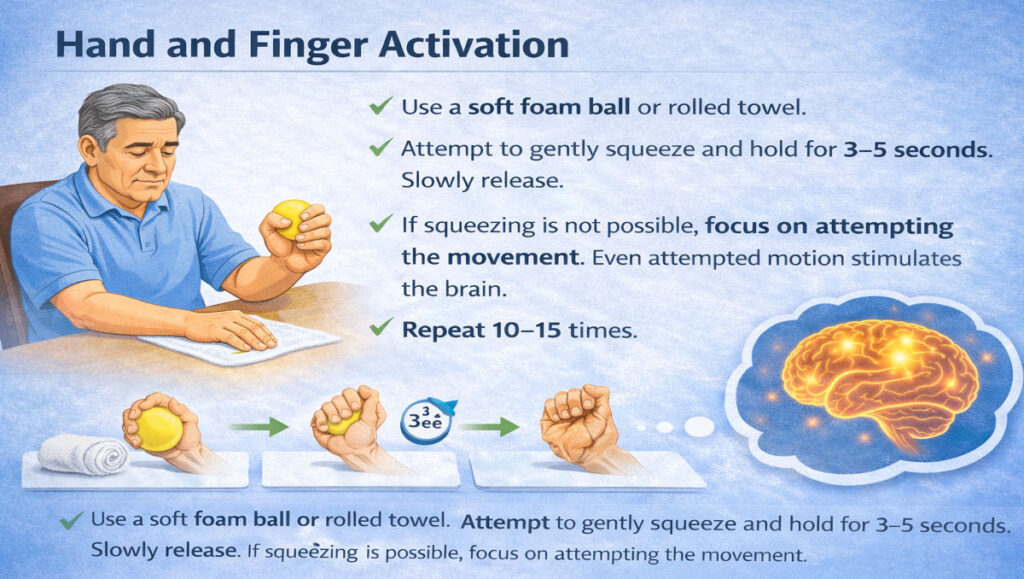
Use a soft foam ball or rolled towel.
Attempt to gently squeeze and hold for 3–5 seconds. Slowly release.
If squeezing is not possible, focus on attempting the movement. Even attempted motion stimulates the brain.
Repeat 10–15 times.
Finger control is often the slowest to return, making this one of the most important stroke arm rehabilitation exercises.
5. Wall Walking
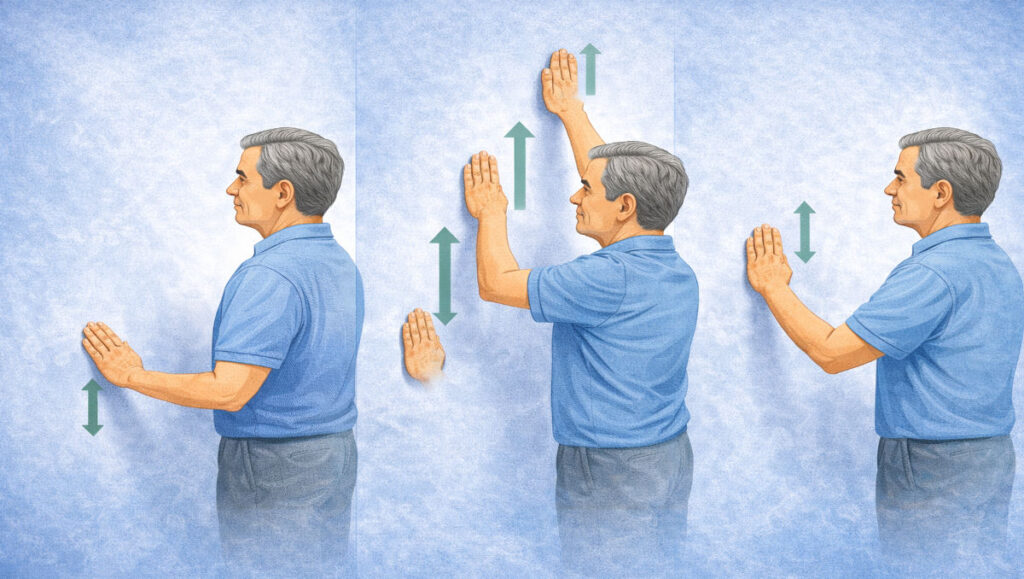
Stand facing a wall.
Place fingertips of the affected hand on the wall at waist height. Slowly “walk” fingers upward as far as possible. Pause briefly, then walk back down.
Repeat 8–12 times.
This strengthens the shoulder and improves control.
6. Mirror Therapy for Arm Recovery
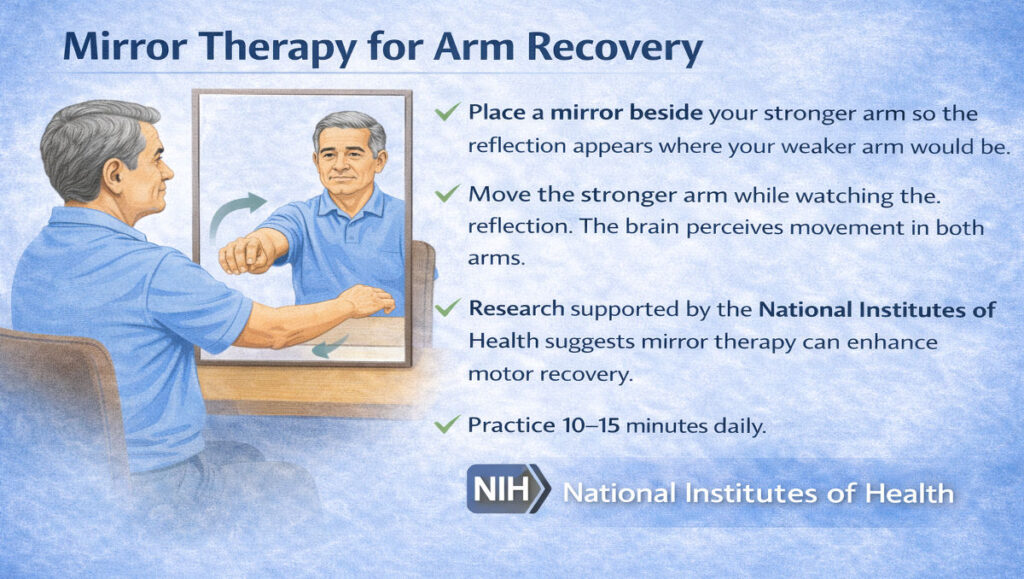
Place a mirror beside your stronger arm so the reflection appears where your weaker arm would be.
Move the stronger arm while watching the reflection. The brain perceives movement in both arms.
Research supported by the National Institutes of Health suggests mirror therapy can enhance motor recovery.
Practice 10–15 minutes daily.
7. Functional Task Repetition
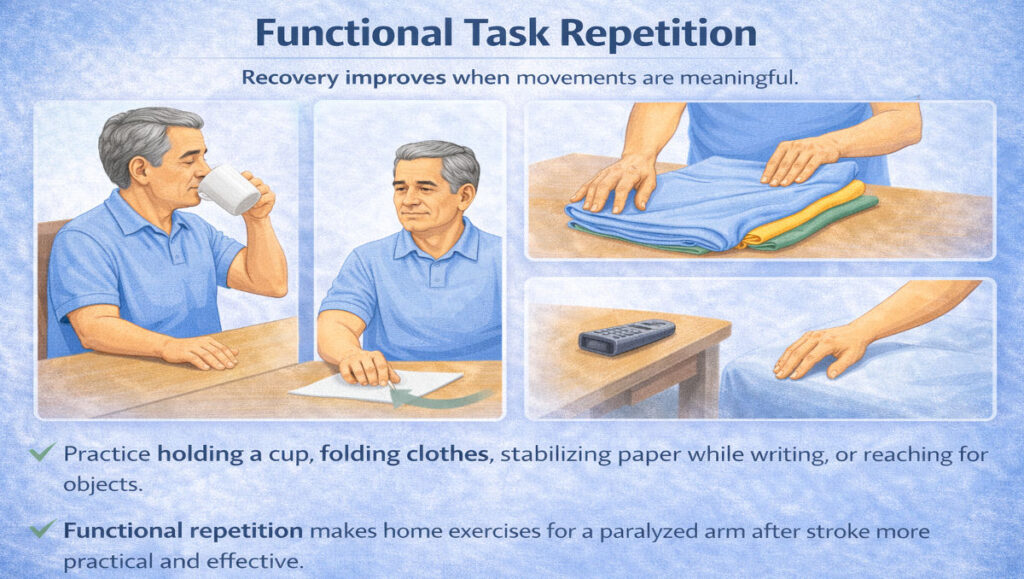
Recovery improves when movements are meaningful.
Practice holding a cup, folding clothes, stabilizing paper while writing, or reaching for objects.
Functional repetition makes home exercises for a paralyzed arm after stroke more practical and effective.
How Often Should You Do Stroke Arm Exercises?
Experts recommend 20–45 minutes of daily structured practice.
Short sessions are acceptable if fatigue occurs.
Consistency builds neuroplasticity.
Intensity is less important than repetition.
Recovery Timeline for Arm Function
0–3 months: Rapid neurological changes occur.
3–6 months: Noticeable strength improvements.
6–12 months: Gradual functional gains.
1+ year: Continued progress possible with structured practice.
Home exercises for a paralyzed arm after stroke remain beneficial even beyond the first year.
Arm improvement depends heavily on how well the brain rebuilds its signaling pathways, which we explain step by step inour comprehensive brain and nerve recovery guide.
Modern Stroke Rehabilitation Options in the U.S.
Advanced therapies include:
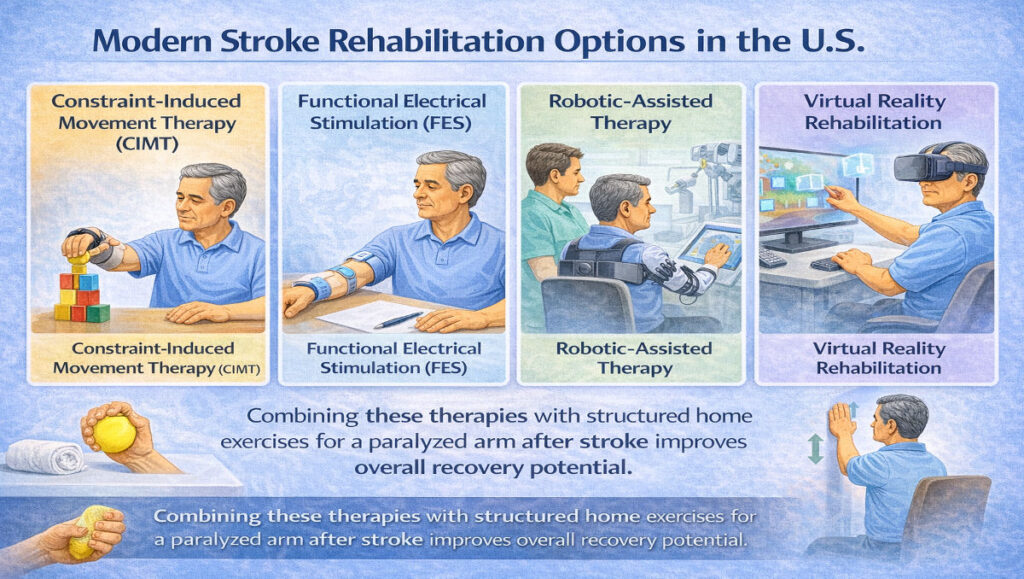
- Constraint-Induced Movement Therapy (CIMT)
- Functional Electrical Stimulation (FES)
- Robotic-assisted therapy
- Virtual reality rehabilitation
Combining these with structured home exercises for a paralyzed arm after stroke improves overall recovery potential.
Common Complications to Watch
Shoulder pain ,Joint stiffness ,Spasticity ,Swelling, Learned non-use
Early attention prevents long-term problems.
Whole-Person Recovery
Physical recovery is only part of the journey.
Depression and frustration are common. Emotional support improves participation in stroke arm recovery exercises.
Nutrition patterns like DASH or Mediterranean diets support vascular health.
Family encouragement increases consistency.
Frequently Asked Questions
Can a paralyzed arm fully recover after stroke?
Recovery varies. Many individuals regain partial or significant function with consistent therapy and home exercises.
How long does it take?
Most recovery occurs in the first 3–6 months, but progress can continue beyond a year.
Are home exercises for a paralyzed arm after stroke enough?
They are essential but work best when combined with professional therapy.
What if there is no movement yet?
Continue passive exercises and mirror therapy. Neural changes may occur before visible movement appears.
Does age affect recovery?
Age may influence speed, but improvement is still possible.
Key Takeaways
Consistent home exercises for a paralyzed arm after stroke stimulate neuroplasticity and improve strength. Early repetition is critical. Small improvements signal progress. Structured home practice combined with professional care offers the best recovery outcomes.
When to Seek Professional Help
Consult your neurologist if pain increases, swelling develops, or movement suddenly worsens.
Medical Disclaimer
This article is for educational purposes only and does not replace professional medical advice. Call 911 immediately if stroke symptoms occur.