American Stroke Association Stroke Recovery Guide: 9 Powerful Steps for Faster Brain Healing
The American Stroke Association Stroke Recovery Guide provides one of the most trusted frameworks for understanding how patients recover after a stroke. A stroke can happen suddenly and disrupt blood flow to the brain, damaging nerve cells responsible for movement, speech, memory, and coordination. For many families, the first days after a stroke are filled with uncertainty because the path to recovery is not always clear.
Medical experts emphasize that stroke recovery is a gradual process rather than an instant transformation. When blood supply to the brain is interrupted, brain cells lose oxygen and nutrients. This interruption weakens neural connections that control muscles and body functions. The American Stroke Association has spent decades researching how the brain heals and how structured rehabilitation helps restore lost abilities.
The American Stroke Association Stroke Recovery Guide explains that recovery improves significantly when rehabilitation begins early. Physical therapy, speech therapy, and daily rehabilitation exercises stimulate nerve pathways that help the brain reorganize itself. This natural ability of the brain to rebuild communication between nerve cells is known as neuroplasticity.
Families searching for recovery solutions often want to know whether movement, speech, and independence can return after a stroke. The answer is that recovery is possible for many patients when treatment begins quickly and rehabilitation continues consistently. Understanding the principles explained in the American Stroke Association Stroke Recovery Guide helps patients and caregivers approach recovery with knowledge, patience, and confidence.
What Is the American Stroke Association Stroke Recovery Guide
The American Stroke Association Stroke Recovery Guide is a comprehensive educational resource created to help stroke survivors understand the recovery journey. It explains how strokes affect the brain, what treatments help patients stabilize after the emergency phase, and how rehabilitation supports long-term improvement.
The American Stroke Association is a division of the American Heart Association dedicated to stroke awareness, research, and patient education. Through clinical research and collaboration with neurologists, rehabilitation specialists, and hospitals worldwide, the organization provides evidence-based guidance for stroke recovery.
According to the American Stroke Association Stroke Recovery Guide, recovery occurs through a combination of medical care, rehabilitation therapy, and lifestyle changes. After the initial stroke emergency is treated, the focus shifts toward restoring lost abilities and preventing future strokes.
The guide also emphasizes that stroke recovery is unique for every patient. Some individuals recover quickly when the stroke affects a small area of the brain. Others may require months or years of rehabilitation when larger brain regions are involved. Understanding these differences helps families develop realistic expectations during the recovery process.
The American Stroke Association, a division of the American Heart Association, provides evidence-based stroke recovery guidance for patients and families.
How Stroke Affects the Brain
To understand the principles behind the American Stroke Association Stroke Recovery Guide, it is important to first understand what happens in the brain during a stroke.
A stroke occurs when blood flow to a portion of the brain is interrupted. This interruption can occur when a blood clot blocks an artery or when a weakened blood vessel ruptures and causes bleeding inside the brain. Without oxygen and nutrients carried by blood, brain cells begin to lose their ability to function.
The brain controls movement, speech, sensation, and memory through a network of nerve cells. When a stroke damages these cells, the signals that travel from the brain to the body become disrupted. This disruption can lead to weakness or paralysis on one side of the body, difficulty speaking, confusion, or problems with coordination.
The American Stroke Association Stroke Recovery Guide explains that stroke damage does not always remain permanent. In many cases, the brain has the ability to reorganize its neural pathways. When patients participate in structured rehabilitation exercises, healthy areas of the brain can gradually take over the functions previously performed by damaged regions.
Understanding how stroke interrupts blood circulation can help families identify symptoms early. Read our detailed guide What Causes a Stroke to learn the medical reasons behind stroke damage.
Understanding how strokes affect the brain helps patients appreciate why rehabilitation exercises must be repeated consistently. Each repeated movement helps strengthen the communication between nerve cells and muscles, gradually restoring function.
The First Stage of Stroke Recovery
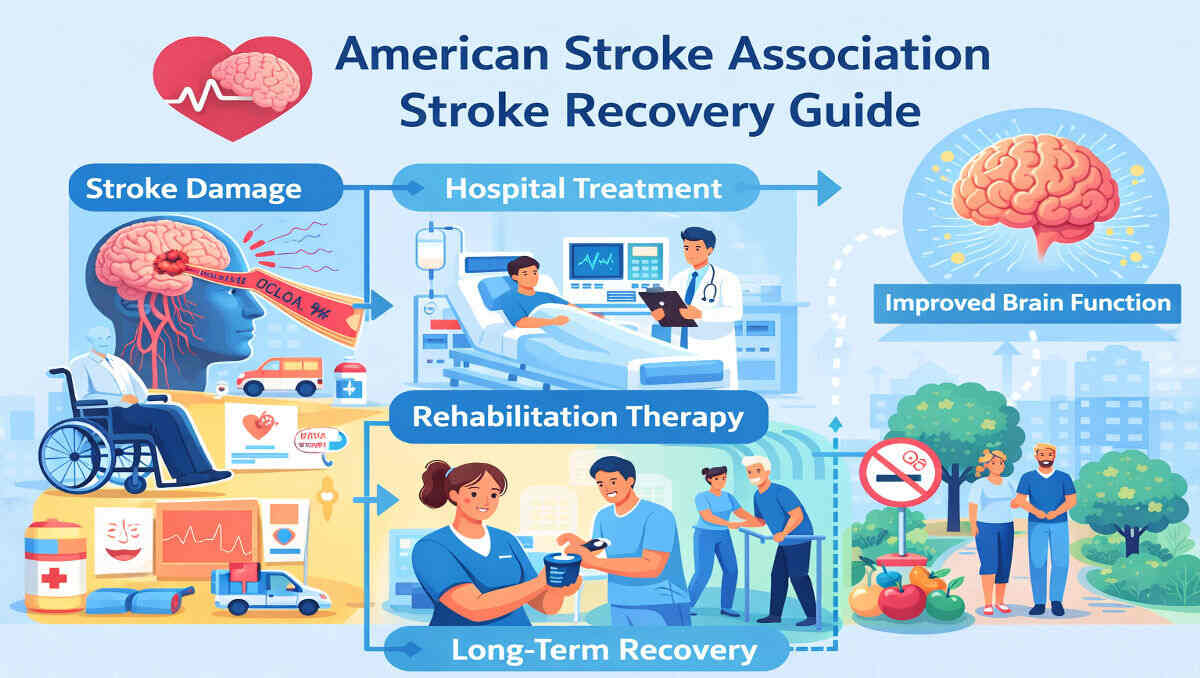
The first stage described in the American Stroke Association Stroke Recovery Guide begins immediately after the stroke occurs. During this phase, doctors focus on stabilizing the patient and preventing additional brain damage.
Emergency treatment aims to restore blood flow to the brain as quickly as possible. In ischemic strokes, medications may be used to dissolve blood clots blocking blood vessels. In hemorrhagic strokes, doctors work to control bleeding and reduce pressure inside the brain.
Once the patient is medically stable, rehabilitation planning begins. Doctors evaluate how the stroke affected movement, speech, balance, and memory. This evaluation helps determine what types of therapy will be needed during recovery.
The American Stroke Association Stroke Recovery Guide highlights that early rehabilitation is critical. Starting therapy soon after a stroke can significantly improve long-term outcomes. Even simple exercises performed during the early days of recovery can stimulate neural pathways and begin rebuilding lost connections.
The Rehabilitation Phase of Recovery
The rehabilitation phase is one of the most important stages explained in the American Stroke Association Stroke Recovery Guide. During this stage, therapy focuses on helping the brain relearn lost skills.
Physical therapy helps patients regain strength and coordination. Therapists guide patients through exercises that retrain muscles to move properly. These exercises may include standing, walking, stretching, and balance training.
Speech therapy is essential for patients who experience communication difficulties after a stroke. Speech therapists help patients practice speaking, understanding language, and improving swallowing ability when necessary.
Occupational therapy focuses on everyday activities such as dressing, eating, and writing. These therapies help patients regain independence and rebuild confidence during the recovery process.
The American Stroke Association Stroke Recovery Guide explains that rehabilitation works best when patients remain consistent with therapy routines. Repetition strengthens neural pathways and encourages the brain to adapt to the injury.
You can also explore expert medical insights about stroke rehabilitation in our article Mayo Clinic Stroke Recovery Explained.
The Long-Term Recovery Phase
Stroke recovery does not end when patients leave the hospital. The American Stroke Association Stroke Recovery Guide emphasizes that recovery often continues for months or even years after the initial stroke.
During this phase, patients continue practicing exercises and therapy routines that strengthen neural connections. Improvements may occur gradually, but consistent rehabilitation often leads to meaningful progress over time.
Some stroke survivors regain nearly full independence, while others may continue experiencing partial weakness or coordination difficulties. Even when full recovery is not possible, rehabilitation helps patients improve their quality of life and maintain independence.
The guide also highlights the importance of emotional support during recovery. Stroke survivors may experience frustration or anxiety as they adjust to physical changes. Family encouragement and professional counseling can help patients remain motivated during rehabilitation.
Factors That Influence Stroke Recovery
The American Stroke Association Stroke Recovery Guide explains that several factors influence how quickly a patient recovers after a stroke.
The severity of the stroke is one of the most important factors. A small stroke affecting a limited area of the brain may allow faster recovery compared to a severe stroke involving multiple brain regions.
The location of brain damage also affects recovery outcomes. When strokes affect areas responsible for movement or speech, rehabilitation may require specialized therapy to rebuild these functions.
Age and general health also play an important role. Younger patients often recover faster because their brains adapt more easily to neurological changes. However, rehabilitation can benefit patients of all ages.
According to the Centers for Disease Control and Prevention (CDC), high blood pressure remains the leading risk factor for stroke worldwide.
Understanding stroke risk factors is essential for prevention. You can also explore medical recommendations in our guide CDC Stroke Prevention Guidelines Explained to learn how lifestyle changes reduce stroke risk.
Scientific discoveries about stroke causes and brain damage are explained in our article NINDS Stroke Research, which highlights how modern neurological studies improve stroke treatment and recovery.
Finally, the timing of treatment significantly influences recovery. The American Stroke Association Stroke Recovery Guide consistently emphasizes that early medical care improves survival rates and recovery potential.
Lifestyle Changes That Support Stroke Recovery
Lifestyle improvements play a critical role in the recovery process. The American Stroke Association Stroke Recovery Guide recommends several healthy habits that support long-term brain health.
A balanced diet rich in fruits, vegetables, and whole grains helps maintain healthy blood vessels and improves circulation. Reducing salt intake also helps control blood pressure, which is a major risk factor for stroke.
Regular physical activity improves muscle strength and cardiovascular health. Even gentle exercises such as walking or stretching can support circulation and improve overall well-being.
Managing stress and maintaining emotional health are also important. Stroke survivors who maintain a positive environment and strong social support system often experience better recovery outcomes.
These lifestyle habits not only support recovery but also reduce the risk of future strokes.
The Importance of Neuroplasticity in Stroke Recovery
One of the most important scientific discoveries highlighted in the American Stroke Association Stroke Recovery Guide is the concept of neuroplasticity. Neuroplasticity refers to the brain’s ability to reorganize itself and form new neural connections after injury.
When a stroke damages certain brain cells, other areas of the brain may adapt to perform similar functions. This process occurs gradually as patients repeat rehabilitation exercises that stimulate nerve pathways.
For example, a patient who practices hand movements repeatedly may gradually regain control of the hand as the brain strengthens new neural connections. Speech exercises work in a similar way by encouraging the brain to rebuild communication pathways.
The American Stroke Association Stroke Recovery Guide emphasizes that neuroplasticity requires repetition and patience. Every exercise session helps reinforce neural pathways that support recovery.
Preventing Another Stroke
Preventing future strokes is an essential part of the recovery journey. The American Stroke Association Stroke Recovery Guide explains that many stroke survivors remain at risk of experiencing another stroke if risk factors are not managed.
Controlling blood pressure is one of the most important prevention strategies. High blood pressure weakens blood vessels and increases the likelihood of both ischemic and hemorrhagic strokes.
Managing diabetes and cholesterol levels also helps protect blood vessels and improve circulation. Doctors often prescribe medications to reduce clot formation and stabilize cardiovascular health.
The National Institute of Neurological Disorders and Stroke (NINDS) explains that managing blood pressure and cardiovascular health greatly reduces stroke risk.
Lifestyle improvements such as quitting smoking and maintaining a healthy weight further reduce stroke risk. When patients combine medical treatment with healthy habits, the likelihood of future strokes decreases significantly.
Emotional Recovery After Stroke
Stroke recovery is not only physical but also emotional. The American Stroke Association Stroke Recovery Guide acknowledges that stroke survivors often experience emotional changes during the recovery process.
Depression and anxiety may occur as patients adjust to physical limitations. Frustration is also common when progress feels slow or difficult.
Support from family members, caregivers, and rehabilitation professionals plays an essential role in helping patients overcome these challenges. Counseling and stroke support groups provide valuable emotional encouragement and help patients stay motivated.
Maintaining a positive mindset helps patients remain committed to therapy and recovery routines.
Stroke Recovery Guidance for Patients and Families
Families play a crucial role in stroke rehabilitation. The American Stroke Association Stroke Recovery Guide encourages caregivers to support patients during therapy sessions and daily exercises.
Caregivers can help create a structured recovery routine that includes regular therapy sessions, healthy meals, and physical activity. Encouragement from family members often helps stroke survivors stay motivated throughout the recovery journey.
It is also important for caregivers to understand the challenges stroke survivors face. Patience and empathy help create a supportive environment that promotes emotional and physical healing.
Families looking for step-by-step recovery support can explore our Brain & Nerve Recovery Guide, which explains daily exercises and recovery practices used by many stroke and paralysis patients.
For a broader understanding of trusted organizations supporting stroke rehabilitation worldwide, read our guide Best Stroke Recovery Resources Worldwide.
When families work together with medical professionals, recovery outcomes often improve significantly.
Frequently Asked Questions
What is the American Stroke Association Stroke Recovery Guide?
The American Stroke Association Stroke Recovery Guide is a comprehensive educational resource that explains how stroke recovery works, including rehabilitation methods, recovery timelines, and prevention strategies.
How long does stroke recovery usually take?
Recovery timelines vary depending on the severity of the stroke and how quickly treatment begins. Some patients improve within weeks, while others continue recovering for months or years.
Can stroke survivors regain movement after paralysis?
Many stroke survivors regain partial or significant movement through rehabilitation therapy. Repeated exercises stimulate neural pathways and help the brain rebuild communication with muscles.
Why is early rehabilitation important?
Early rehabilitation helps stimulate the brain during the critical recovery period after a stroke. Starting therapy soon after the stroke can significantly improve long-term outcomes.
Can lifestyle changes reduce stroke risk?
Yes. Healthy habits such as controlling blood pressure, maintaining a balanced diet, exercising regularly, and avoiding smoking help reduce the risk of future strokes.
Final Thoughts
The American Stroke Association Stroke Recovery Guide provides valuable insights into how stroke survivors rebuild strength, movement, and independence. Recovery is rarely immediate, but the brain’s ability to adapt offers hope for many patients.
With early treatment, consistent rehabilitation, and strong family support, many stroke survivors regain important abilities that allow them to live fulfilling lives. Understanding the principles explained in the American Stroke Association Stroke Recovery Guide helps patients approach recovery with knowledge and confidence.
Medical Disclaimer
This article is intended for educational purposes only and should not replace professional medical advice. Always consult a qualified healthcare professional for diagnosis, treatment, and rehabilitation guidance related to stroke recovery.