
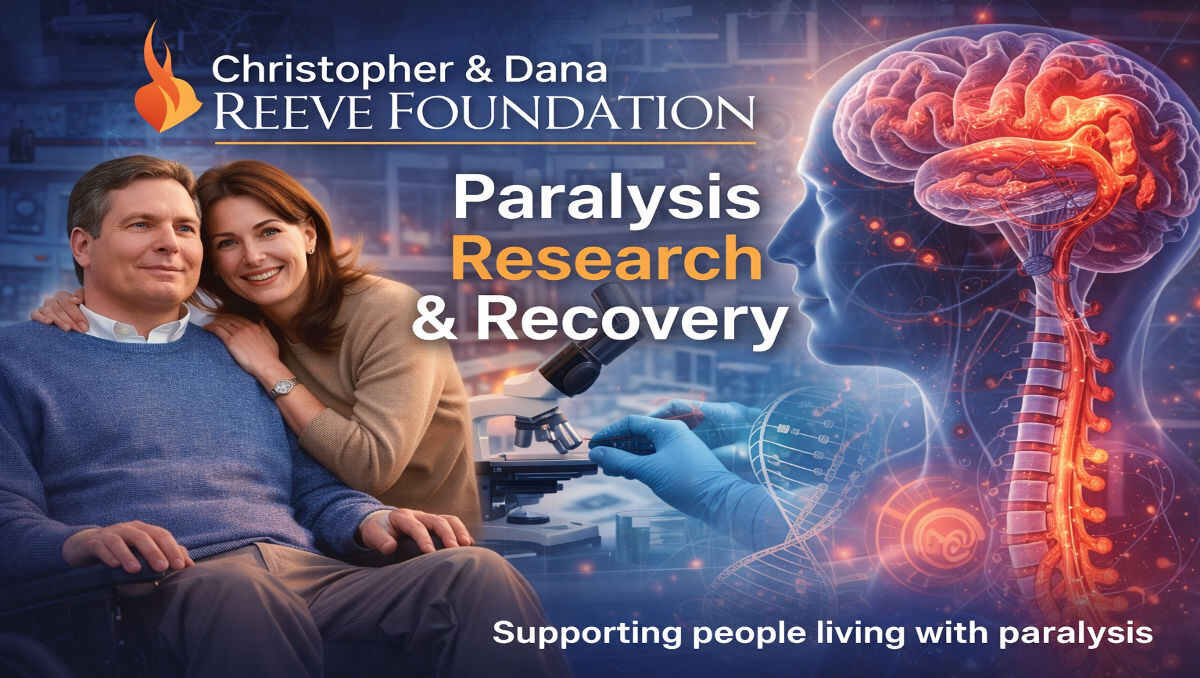
Christopher & Dana Reeve Foundation: 9 Powerful Resources Supporting Paralysis Recovery
The Christopher & Dana Reeve Foundation has become one of the most recognized organizations supporting individuals living with paralysis and spinal cord injuries. For many patients and families facing sudden neurological injury, the journey toward recovery often begins with uncertainty, emotional stress, and a search for reliable guidance. Medical rehabilitation can be complex, and understanding available support systems becomes an essential part of rebuilding independence and quality of life.
The mission of the Christopher & Dana Reeve Foundation is centered on improving the lives of people living with paralysis while advancing scientific research aimed at restoring neurological function. Through education, research funding, and patient support programs, the foundation works to empower individuals affected by spinal cord injury, stroke-related paralysis, and other neurological conditions.
Paralysis can occur due to a wide range of causes including spinal cord injury, stroke, traumatic brain injury, and neurological disorders. These conditions interrupt communication between the brain and muscles, leading to weakness or loss of movement in certain parts of the body. The recovery process often requires long-term rehabilitation, medical guidance, and emotional support from both healthcare professionals and families.
The Christopher & Dana Reeve Foundation provides valuable resources that help patients understand rehabilitation, medical research developments, and the practical challenges of living with paralysis. By connecting patients with educational tools, support networks, and scientific breakthroughs, the foundation has become an important global resource for individuals navigating neurological recovery.
Understanding how the Christopher & Dana Reeve Foundation supports paralysis recovery can help patients and caregivers explore available rehabilitation resources and develop a clearer perspective on long-term recovery possibilities.
What Is the Christopher & Dana Reeve Foundation
The Christopher & Dana Reeve Foundation is a nonprofit organization dedicated to improving the quality of life for individuals living with paralysis while supporting research aimed at curing spinal cord injuries. The organization was founded in honor of actor Christopher Reeve, who became paralyzed following a spinal cord injury in 1995.
After his injury, Christopher Reeve became a global advocate for spinal cord injury research and patient support. His determination to promote scientific research and improve rehabilitation opportunities inspired the creation of the foundation that now carries his name.
Today, the Christopher & Dana Reeve Foundation works with scientists, doctors, and rehabilitation specialists around the world to advance neurological research and provide practical support to individuals living with paralysis. The foundation funds research programs focused on spinal cord repair, nerve regeneration, and improved rehabilitation technologies.
Beyond scientific research, the organization also provides education programs and community support initiatives. These programs help patients and caregivers understand medical treatments, rehabilitation options, and lifestyle adjustments necessary for living with paralysis.
Through these combined efforts, the Christopher & Dana Reeve Foundation continues to promote innovation in neurological recovery while supporting the everyday needs of individuals affected by paralysis.
Understanding Paralysis and Neurological Injury
Paralysis occurs when the communication pathways between the brain and muscles become disrupted. This disruption may result from injury to the spinal cord, damage to nerve cells in the brain, or neurological diseases affecting the nervous system.
The brain sends signals through the spinal cord to control voluntary muscle movement. When these signals cannot reach the muscles due to injury or nerve damage, movement becomes weakened or lost entirely. Depending on the location and severity of the injury, paralysis may affect one limb, one side of the body, or the entire lower body.
The Christopher & Dana Reeve Foundation focuses much of its research support on spinal cord injuries because these injuries are a major cause of permanent paralysis worldwide. When the spinal cord is damaged, nerve signals traveling between the brain and body are interrupted, leading to loss of motor function and sensation.
Neurological injuries may also affect breathing, bladder control, blood circulation, and other essential body functions. Because of this complexity, paralysis rehabilitation often requires a team of medical professionals including neurologists, rehabilitation therapists, and support specialists.
Patients and caregivers looking for trusted medical organizations can explore our article Best Stroke Recovery Resources Worldwide, which highlights institutions supporting neurological recovery.
Understanding how paralysis occurs is essential for developing treatments that can restore nerve communication. This is why the Christopher & Dana Reeve Foundation invests heavily in research exploring nerve regeneration and spinal cord repair.
Scientific Research Supported by the Christopher & Dana Reeve Foundation
One of the most important contributions of the Christopher & Dana Reeve Foundation is its commitment to advancing scientific research focused on paralysis recovery. Through funding initiatives and collaborative research programs, the foundation supports studies aimed at restoring neurological function.
Researchers funded by the foundation explore several key areas of neurological science. One major focus is nerve regeneration, which involves studying how damaged nerve cells might repair themselves or regrow after injury. Scientists are investigating whether certain biological therapies can stimulate nerve repair within the spinal cord.
Another research area involves neuroplasticity, which refers to the brain’s ability to reorganize neural pathways following injury. By understanding how the nervous system adapts after trauma, researchers can develop therapies that encourage new neural connections.
The official Christopher & Dana Reeve Foundation provides detailed information about spinal cord injury research and patient support programs that help people living with paralysis worldwide.
The Christopher & Dana Reeve Foundation also supports research into assistive technologies designed to improve independence for individuals living with paralysis. These technologies include advanced mobility devices, robotic rehabilitation equipment, and neurostimulation therapies.
Through continued scientific investigation, the foundation aims to develop treatments that not only manage paralysis but potentially restore movement in individuals with spinal cord injuries.
The American Stroke Association provides detailed education about stroke rehabilitation and recovery programs that help patients regain independence after neurological injury.
Modern neurological breakthroughs discussed in NINDS Stroke Research highlight how scientists are developing therapies that improve recovery after brain injury.
Rehabilitation Strategies for Paralysis Recovery
Rehabilitation plays a crucial role in helping individuals regain function after neurological injury. The Christopher & Dana Reeve Foundation emphasizes the importance of structured rehabilitation programs that stimulate nerve activity and support physical recovery.
Rehabilitation therapy focuses on retraining muscles and strengthening neural pathways that control movement. Physical therapy helps patients improve muscle strength, balance, and coordination. Repeated exercises encourage the brain to rebuild communication pathways with affected muscles.
Occupational therapy helps patients relearn everyday activities such as dressing, eating, and writing. These skills are essential for maintaining independence and improving quality of life after paralysis.
Many rehabilitation principles discussed here are also explained in detail in our guide Mayo Clinic Stroke Recovery Explained, which describes how structured therapy helps rebuild brain-body connections after stroke.
Many patients also benefit from structured recovery routines explained in our Brain & Nerve Recovery Guide, which provides practical methods to stimulate nerves and support long-term neurological healing.
Patients looking for structured rehabilitation strategies can also read our guide on American Stroke Association Stroke Recovery Guide, which explains how therapy programs support neurological recovery.
Speech therapy may also be necessary for patients whose neurological injuries affect communication or swallowing. Therapists guide patients through exercises that strengthen speech muscles and improve language processing.
The Christopher & Dana Reeve Foundation encourages patients to participate in consistent rehabilitation routines because repetition helps stimulate nerve activity and support neurological recovery.
Emotional Support and Community Programs
Living with paralysis often presents emotional challenges in addition to physical limitations. Many individuals experience anxiety, depression, or uncertainty as they adjust to life after neurological injury.
The Christopher & Dana Reeve Foundation provides community support programs designed to help individuals connect with others who share similar experiences. Peer support groups allow patients to share recovery stories, exchange practical advice, and build emotional resilience.
Caregivers and family members also benefit from educational resources provided by the foundation. These resources help families understand the rehabilitation process and learn how to support loved ones during recovery.
Community programs organized by the Christopher & Dana Reeve Foundation also promote awareness about spinal cord injuries and the importance of accessibility for individuals living with disabilities.
By fostering a supportive environment, the foundation helps patients maintain hope and motivation throughout the rehabilitation journey.
Medical Innovations in Paralysis Treatment
Advances in medical technology continue to reshape the future of paralysis treatment. The Christopher & Dana Reeve Foundation actively supports research exploring new therapies that may improve neurological recovery.
One promising area of innovation involves electrical stimulation techniques that activate nerve pathways within the spinal cord. These therapies use controlled electrical signals to stimulate muscles and encourage movement in paralyzed limbs.
Stem cell research is another area of interest supported by the foundation. Scientists are investigating whether stem cells can help repair damaged spinal cord tissue and restore nerve communication.
Researchers are also exploring advanced rehabilitation technologies such as robotic exoskeletons that assist patients in standing and walking during therapy sessions.
The Christopher & Dana Reeve Foundation believes that combining medical research with rehabilitation innovation will ultimately lead to more effective treatments for paralysis.
Long-Term Recovery and Lifestyle Adaptation
Recovery from paralysis is often a long-term process requiring patience and consistent effort. The Christopher & Dana Reeve Foundation emphasizes that rehabilitation should continue even after the initial stages of recovery.
Lifestyle adjustments can significantly improve quality of life for individuals living with paralysis. Maintaining physical activity, following medical advice, and participating in therapy sessions help support overall health and mobility.
Adaptive technologies and home modifications also help individuals maintain independence. Wheelchair-accessible environments, assistive devices, and rehabilitation equipment enable patients to perform everyday tasks more comfortably.
The Christopher & Dana Reeve Foundation encourages individuals living with paralysis to remain active in their communities and pursue personal goals despite physical challenges.
Preventing future neurological damage is also important, and our article CDC Stroke Prevention Guidelines Explained outlines medical strategies that help reduce stroke risk.
With proper support and medical guidance, many individuals living with paralysis continue to lead fulfilling and productive lives.
The Global Impact of the Christopher & Dana Reeve Foundation
Since its founding, the Christopher & Dana Reeve Foundation has played a significant role in raising awareness about paralysis and promoting scientific research aimed at neurological recovery.
The foundation collaborates with medical institutions, rehabilitation centers, and research laboratories worldwide to advance understanding of spinal cord injuries. Through funding initiatives and educational programs, the organization continues to drive innovation in paralysis treatment.
The impact of the Christopher & Dana Reeve Foundation extends beyond research laboratories. Its support services provide valuable guidance for individuals navigating the challenges of paralysis recovery.
By connecting patients, researchers, and healthcare professionals, the foundation continues to contribute to the global effort to improve neurological health and rehabilitation outcomes.
Frequently Asked Questions
What is the Christopher & Dana Reeve Foundation
The Christopher & Dana Reeve Foundation is a nonprofit organization dedicated to improving the lives of individuals living with paralysis and supporting research aimed at curing spinal cord injuries.
What types of research does the foundation support
The foundation funds research focused on spinal cord repair, nerve regeneration, neuroplasticity, and rehabilitation technologies that help improve recovery for individuals with paralysis.
Can people recover from paralysis
Recovery depends on the cause and severity of the neurological injury. Many patients regain partial function through rehabilitation and therapy, while research continues to explore treatments that may restore nerve communication.
How does the foundation support patients
The Christopher & Dana Reeve Foundation provides educational resources, peer support programs, and access to medical research updates that help patients and caregivers navigate the recovery process.
Why is spinal cord research important
Spinal cord injuries disrupt nerve communication between the brain and body. Research supported by the foundation aims to develop treatments that restore nerve function and improve quality of life for individuals with paralysis.
Final Thoughts
The Christopher & Dana Reeve Foundation has become a powerful force in the effort to improve the lives of individuals living with paralysis. Through its dedication to research, rehabilitation support, and patient education, the organization continues to inspire hope within the neurological recovery community.
Scientific discoveries funded by the foundation are expanding our understanding of nerve repair and spinal cord regeneration. At the same time, community programs and educational resources provide essential guidance for individuals navigating the complex journey of paralysis recovery.
By combining scientific innovation with compassionate support, the Christopher & Dana Reeve Foundation continues to play a vital role in shaping the future of neurological rehabilitation.
Medical Disclaimer
The information provided in this article is intended for educational purposes only and should not replace professional medical advice, diagnosis, or treatment. Always consult a qualified healthcare professional for medical guidance related to paralysis, stroke recovery, or neurological rehabilitation.