
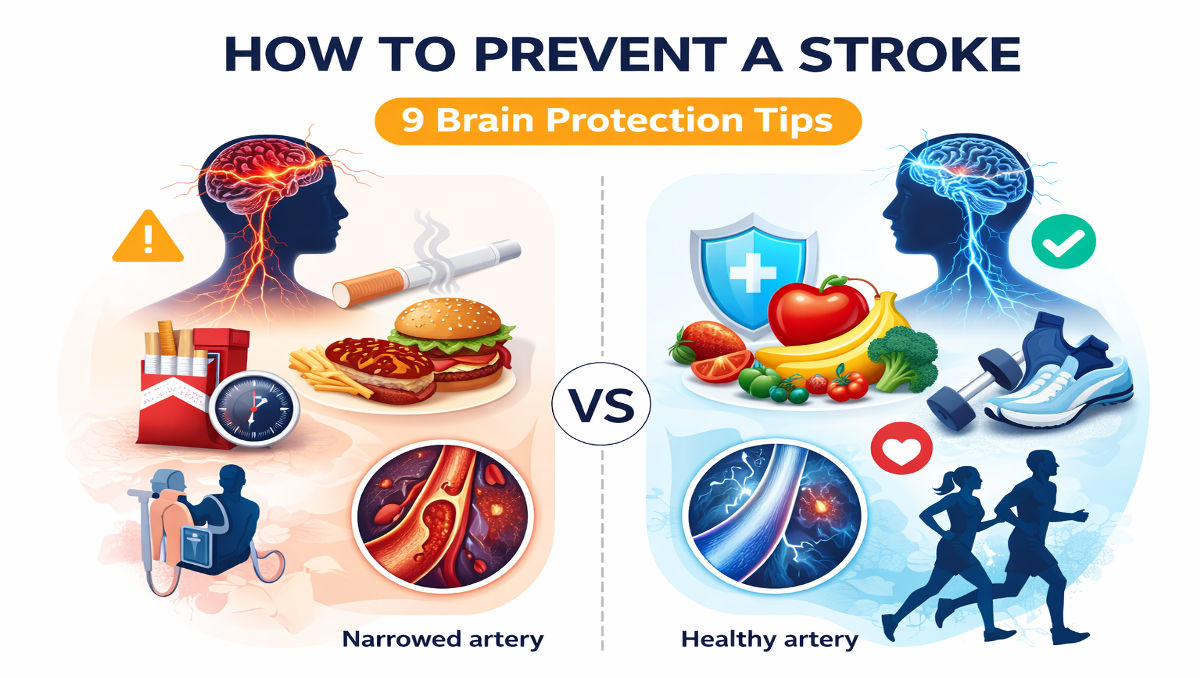
How to Prevent a Stroke: 9 Powerful Ways to Protect Your Brain Before Damage Begins
How to prevent a stroke is one of the most important health questions anyone can ask. A stroke happens when blood flow to the brain suddenly stops or when a blood vessel inside the brain ruptures. Brain cells depend on oxygen and nutrients every second, and even a short interruption can cause permanent damage.
Many people believe strokes occur suddenly without warning. In reality, most strokes develop slowly over time because blood vessels become weak, narrow, or blocked. Conditions such as high blood pressure, diabetes, smoking, and poor circulation gradually damage arteries that supply the brain.
Understanding how to prevent a stroke means protecting brain circulation before a crisis occurs. Prevention focuses on maintaining healthy blood vessels, stable blood pressure, and proper nerve function. When the brain receives consistent blood flow, nerve communication remains strong and neurological health stays protected.
Learning how to prevent a stroke is therefore not only about avoiding disease. It is about preserving movement, speech, memory, and independence for the future.
How to Prevent a Stroke by Protecting Brain Blood Circulation
The brain is one of the most energy-demanding organs in the body. Although it represents only a small portion of body weight, it consumes a large share of oxygen and nutrients delivered through the bloodstream. This constant demand makes the brain extremely sensitive to circulation problems.
Understanding how to prevent a stroke begins with protecting blood flow to the brain. Arteries carry oxygen-rich blood through a complex network that nourishes billions of brain cells. When these vessels remain healthy, the brain receives the energy required for thinking, movement, and coordination.
Maintaining healthy circulation is essential for brain protection. The American Stroke Association explains that strong blood flow helps deliver oxygen and nutrients that keep brain cells alive.
However, when arteries narrow due to cholesterol deposits or inflammation, circulation becomes restricted. Reduced blood flow places stress on brain tissue and increases the risk that a clot may suddenly block the artery.
When blood flow stops completely, brain cells begin dying within minutes. This is why maintaining strong circulation is one of the most powerful strategies for preventing stroke.
Protecting brain blood flow keeps neural communication stable and reduces the likelihood of sudden neurological damage.
High Blood Pressure: The Most Dangerous Stroke Risk
High blood pressure is widely recognized as the leading cause of stroke worldwide. Constant pressure on artery walls weakens blood vessels and damages their inner lining over time. When arteries become fragile, they are more likely to rupture or develop blockages.
Learning how to prevent a stroke requires careful management of blood pressure levels. Many people live with elevated blood pressure without noticing symptoms. Because it often develops silently, hypertension gradually damages arteries before warning signs appear.
Over time, this damage causes arteries to become stiff and narrow. Narrow arteries make it easier for blood clots to block circulation to the brain.
According to the World Health Organization, uncontrolled high blood pressure is one of the leading causes of stroke worldwide and should be monitored regularly.
Maintaining normal blood pressure helps preserve healthy blood vessels and stable circulation. Proper monitoring, healthy lifestyle habits, and medical supervision when necessary can significantly reduce stroke risk.
By controlling blood pressure, individuals protect the brain’s delicate vascular network from long-term damage.
Blood Clots and Blocked Brain Arteries
One of the most common reasons strokes occur is the formation of blood clots that block arteries supplying the brain. These clots may form directly inside brain vessels or travel from other parts of the body.
Understanding how to prevent a stroke requires attention to factors that increase clot formation. Conditions such as high cholesterol, irregular heart rhythms, and unhealthy blood vessels increase the likelihood that clots may develop.
When a clot blocks an artery, oxygen can no longer reach brain tissue. Brain cells quickly lose the energy needed to function, and neurological symptoms begin to appear.
To understand how blocked arteries affect the brain, read our detailed guide on what is a stroke, which explains how blood flow interruption damages brain cells.
Blocked blood flow leads to what doctors call an ischemic stroke. This type accounts for the majority of strokes worldwide.Maintaining healthy circulation and preventing clot formation are therefore critical components of stroke prevention.
Diabetes and Damage to Blood Vessels
Diabetes significantly increases the risk of stroke because high blood sugar damages blood vessels over time. Elevated glucose levels trigger inflammation and weaken artery walls throughout the body.
Learning how to prevent a stroke involves controlling blood sugar levels and protecting vascular health. When diabetes remains unmanaged, arteries become more vulnerable to narrowing and blockage.
Damaged blood vessels struggle to deliver oxygen efficiently to the brain. This disruption in circulation increases the risk that brain tissue may experience oxygen deprivation.
Managing diabetes through balanced nutrition, physical activity, and proper medical care helps reduce these risks. Stable blood sugar levels allow blood vessels to maintain normal structure and function.
Protecting vascular health in individuals with diabetes is therefore essential for preventing stroke.
Smoking and Its Impact on Brain Circulation
Smoking is one of the most damaging habits affecting blood vessel health. Chemicals in cigarette smoke weaken artery walls and cause inflammation throughout the circulatory system.
Understanding how to prevent a stroke requires eliminating factors that damage blood vessels. Smoking accelerates the buildup of fatty deposits inside arteries and increases the likelihood of clot formation.
Nicotine also raises blood pressure and reduces oxygen levels in the bloodstream. These combined effects place additional strain on the cardiovascular system.
Over time, smokers develop narrowed arteries that restrict blood flow to the brain. When circulation becomes severely limited, the risk of stroke increases dramatically.
Quitting smoking allows blood vessels to gradually recover and improves overall cardiovascular health.
The Early Warning Signs That Can Prevent a Major Stroke
Many strokes are preceded by warning symptoms that signal reduced blood flow to the brain. Recognizing these early signs can allow people to seek treatment before permanent damage occurs.
Sudden weakness in the face, arm, or leg may indicate that a part of the brain is not receiving enough oxygen. Speech difficulty, confusion, and loss of balance are also important warning signs.
Understanding how to prevent a stroke includes recognizing these symptoms and responding quickly. Early medical evaluation can identify circulation problems before they become severe.
Some individuals experience temporary episodes called transient ischemic attacks. These brief events often resolve quickly but indicate that a major stroke may occur later.Immediate medical care during these warning stages can prevent long-term neurological injury.
Why Stroke Often Leads to Paralysis
Stroke frequently leads to paralysis because it damages the areas of the brain responsible for controlling movement. The brain communicates with muscles through nerve pathways that transmit electrical signals.
When a stroke disrupts these pathways, muscles no longer receive proper instructions from the brain. As a result, weakness or complete loss of movement may develop.
Paralysis usually affects one side of the body because each hemisphere of the brain controls the opposite side. Damage to motor regions interrupts communication between nerves and muscles.
Understanding how to prevent a stroke therefore protects the brain areas responsible for mobility and coordination. Preventing stroke also prevents the neurological damage that causes long-term disability.
Protecting brain circulation ultimately preserves independence and the ability to move freely.
If stroke has already caused weakness or nerve damage, structured treatment may help improve recovery. Learn more about our medicine for paralysis recovery in Virupakshipuram, which focuses on restoring nerve communication and muscle response.
The Brain’s Ability to Recover After Stroke
Although stroke can cause serious damage, the brain possesses an extraordinary ability to adapt and reorganize itself. This process is known as neuroplasticity.
Through neuroplasticity, healthy brain cells can form new connections that compensate for damaged areas. Rehabilitation exercises encourage the brain to develop these alternative pathways.
Understanding how to prevent a stroke also helps individuals appreciate the importance of early rehabilitation. When recovery begins soon after injury, the brain has a better chance of rebuilding communication between nerves and muscles.
Families managing recovery at home often benefit from structured guidance. Our Brain & Nerve Recovery Guide explains rehabilitation stages, safe exercises, and dietary strategies that support neurological healing.
Rehabilitation therapy stimulates neural activity and strengthens new connections. Over time, these improvements may restore movement, coordination, and speech.
Supporting the brain’s ability to recover plays a critical role in long-term neurological health.
Common Mistakes That Increase Stroke Risk
Many people unknowingly increase their risk of stroke through daily habits that weaken blood vessels. Poor diet, inactivity, and uncontrolled medical conditions slowly damage the vascular system.
Another common mistake is ignoring early symptoms such as temporary weakness or speech difficulty. These warning signs often indicate underlying circulation problems that require medical attention.
Understanding how to prevent a stroke requires long-term awareness of these risks. Preventive actions are most effective when they are practiced consistently.
Many patients first notice warning symptoms before a stroke occurs. Read our article on paralysis attack symptoms and early neurological warning signs to understand when urgent medical care is needed.
Delaying treatment for high blood pressure, diabetes, or cholesterol allows vascular damage to progress. Over time, these conditions significantly increase the likelihood of stroke.
Recognizing and correcting these mistakes helps protect brain health and prevent neurological emergencies.
Long-Term Strategies That Protect the Brain from Stroke
Stroke prevention is not a single action but a lifelong commitment to protecting cardiovascular health. Maintaining healthy blood vessels ensures that the brain continues receiving oxygen and nutrients.
Regular medical checkups allow individuals to monitor blood pressure, cholesterol levels, and blood sugar. Early detection of abnormal values enables treatment before serious complications occur.
Understanding how to prevent a stroke encourages people to adopt habits that support long-term brain health. Balanced nutrition, physical activity, and stress management strengthen the circulatory system.
These strategies help maintain stable blood flow to the brain and reduce the risk of vascular injury.Protecting the brain’s blood supply is one of the most effective ways to safeguard neurological function throughout life.
Key Takeaways
Understanding how to prevent a stroke begins with protecting blood circulation and maintaining healthy arteries. Managing blood pressure, controlling diabetes, avoiding smoking, and maintaining healthy lifestyle habits significantly reduce stroke risk.
Recognizing early warning symptoms allows individuals to seek medical care before permanent damage occurs. Immediate treatment during these early stages can prevent severe neurological injury.
By maintaining healthy blood vessels and supporting brain circulation, individuals can protect movement, speech, memory, and independence for the future.
Frequently Asked Questions
Can stroke be completely prevented?
Although it is not possible to eliminate risk entirely, many strokes can be prevented by controlling risk factors such as high blood pressure, diabetes, smoking, and poor circulation.
What is the most important way to prevent stroke?
Controlling blood pressure is considered the most effective strategy for preventing stroke because hypertension is the leading cause of vascular damage in the brain.
Does exercise reduce stroke risk?
Yes. Regular physical activity improves circulation, strengthens the heart, and helps regulate blood pressure and body weight.
Can young people have strokes?
Although strokes are more common in older adults, younger individuals may also experience stroke if risk factors such as smoking, obesity, or diabetes are present.
Can stroke recovery improve with rehabilitation
Yes. Rehabilitation exercises stimulate neuroplasticity and help the brain rebuild communication pathways between nerves and muscles.
Final Thoughts
Understanding how to prevent a stroke empowers individuals to protect their brain long before a medical emergency occurs. Healthy blood vessels, stable circulation, and proactive lifestyle choices create a strong defense against neurological damage.
Stroke prevention is not only about avoiding illness. It is about protecting the brain’s ability to think, move, communicate, and maintain independence throughout life.
When people prioritize brain health today, they reduce the risk of devastating neurological consequences in the future.
Medical Disclaimer
The information provided on this website is intended for educational and informational purposes only. It is not intended to replace professional medical advice, diagnosis, or treatment.