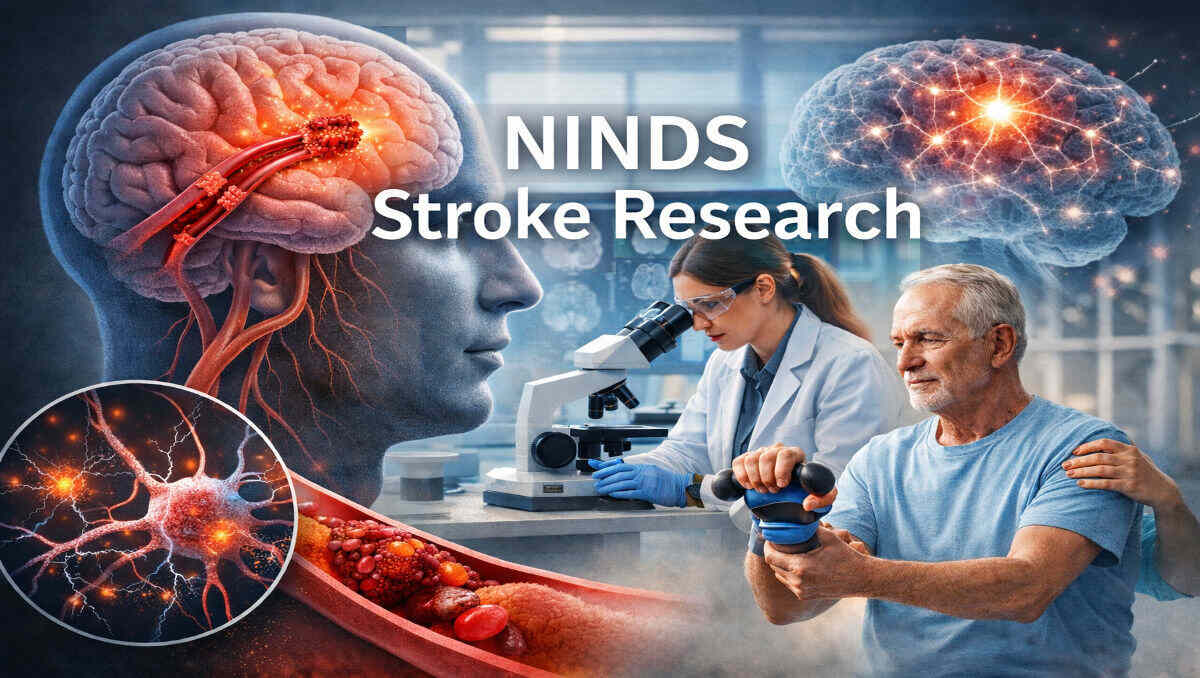
NINDS Stroke Research: 7 Breakthrough Discoveries Improving Stroke Recovery
NINDS stroke research has transformed how doctors understand stroke, recovery, and brain healing. When a stroke suddenly interrupts blood flow to the brain, millions of nerve cells can lose their ability to communicate with muscles and organs. Families often feel fear and uncertainty because movement, speech, or memory may change within minutes.
Many people assume that stroke damage is permanent. However, modern neuroscience has shown that the brain has an extraordinary ability to rebuild communication pathways when the right treatment begins early. This ability is called neuroplasticity, and it is one of the most important discoveries highlighted by NINDS stroke research.
Across the world, stroke remains one of the leading causes of long-term disability. Researchers continue studying how blood flow disruption damages the brain and how targeted rehabilitation can help patients regain function. The insights from NINDS stroke research have guided hospitals, neurologists, and rehabilitation specialists in developing structured recovery programs.
Understanding this research helps families make informed decisions about treatment and rehabilitation. It also helps patients recognize that recovery is not a single step but a process that combines medical treatment, nerve stimulation, and long-term rehabilitation strategies.
What NINDS Stroke Research Reveals
NINDS stroke research focuses on understanding how strokes occur, how the brain responds to injury, and how recovery can be improved through medical treatment and rehabilitation. Scientists supported by the National Institute of Neurological Disorders and Stroke study blood flow interruption, nerve damage, brain inflammation, and neural repair.
Their findings show that recovery depends on three major factors. The first factor is how quickly treatment begins after the stroke. The second factor is the severity and location of brain damage. The third factor is whether patients receive structured rehabilitation that stimulates nerve pathways.
Research supported by NINDS also highlights the importance of circulation improvement, muscle retraining, and consistent therapy. These elements help the brain rebuild communication with affected muscles. When these strategies are applied consistently, many stroke survivors regain movement and independence over time.
Understanding Stroke Through NINDS Stroke Research
To understand NINDS stroke research, it is important to first understand what happens during a stroke. A stroke occurs when blood flow to a part of the brain is interrupted. Without oxygen and nutrients, brain cells begin to weaken and may lose their ability to function.
NINDS researchers classify strokes into two major types. The most common type is ischemic stroke, which occurs when a blood clot blocks an artery supplying the brain. The second type is hemorrhagic stroke, which occurs when a weakened blood vessel ruptures and causes bleeding inside the brain.
Both types of stroke disrupt the brain’s ability to send signals to muscles and organs. This disruption can cause paralysis, speech problems, memory changes, and loss of coordination. NINDS stroke research helps doctors understand how these signals break down and how they can be restored during rehabilitation.
Scientists also study how inflammation and swelling affect the brain after a stroke. These processes can worsen nerve damage if not managed quickly. By understanding these mechanisms, NINDS stroke research has helped doctors develop treatments that reduce secondary brain injury.
Understanding the basic causes of stroke can help patients recognize early warning signs. You can read our detailed guide What Causes a Stroke to learn how blood flow interruptions affect the brain.
According to the National Institute of Neurological Disorders and Stroke (NINDS), stroke occurs when blood supply to part of the brain is interrupted, leading to brain cell damage.
Recovery Timeline Based on NINDS Stroke Research
One of the most important insights from NINDS stroke research is the recovery timeline following a stroke. Recovery does not occur instantly because nerve pathways need time to rebuild. The brain must gradually learn how to send signals through alternative routes.
During the first few weeks after a stroke, the brain enters an active repair phase. Swelling begins to decrease, and the nervous system starts reorganizing itself. NINDS stroke research shows that early therapy during this period can significantly improve recovery outcomes.
The next phase of recovery often occurs during the first three to six months. During this time, repeated movement exercises and rehabilitation stimulate neural connections. These repeated signals encourage the brain to rebuild communication with weakened muscles.
Long-term recovery can continue for months or even years. The brain remains capable of adaptation throughout life, which means that consistent therapy can continue improving movement and coordination even long after the initial stroke.
To understand how rehabilitation helps the brain rebuild neural pathways after a stroke, read our complete guide Mayo Clinic Stroke Recovery Explained.
Severity Differences in Stroke Recovery
Not every stroke affects the brain in the same way. NINDS stroke research emphasizes that stroke severity plays a major role in recovery outcomes. A small stroke affecting a limited brain area may cause mild weakness that improves quickly.
In contrast, a severe stroke affecting large areas of the brain may cause extensive paralysis or speech difficulties. Recovery in these cases may take longer because multiple neural pathways must be rebuilt.
Another important factor is the location of the stroke. If the stroke damages the motor cortex, the part of the brain responsible for controlling movement, paralysis may occur on one side of the body. NINDS stroke research shows that targeted rehabilitation can help retrain surrounding brain areas to compensate for damaged regions.
Understanding stroke severity helps doctors design personalized recovery plans. These plans often combine medication, therapy, and lifestyle adjustments to support nerve repair.
Risk Factors Identified Through NINDS Stroke Research
Researchers studying NINDS stroke research have identified several major risk factors that increase the likelihood of stroke. High blood pressure is considered the most important risk factor because it places constant strain on blood vessels in the brain.
Heart disease and irregular heart rhythms can also increase stroke risk. These conditions can cause blood clots that travel to the brain and block important arteries. Diabetes and high cholesterol further increase the risk by damaging blood vessel walls.
Lifestyle habits also play an important role. Smoking, lack of physical activity, and poor diet can gradually damage circulation and increase stroke risk. NINDS stroke research encourages people to adopt healthy habits that protect both heart and brain health.
The Centers for Disease Control and Prevention (CDC) explains that high blood pressure, smoking, and diabetes are major contributors to stroke risk.
Understanding these risk factors allows individuals to take preventive steps before a stroke occurs. Early awareness often reduces the likelihood of severe neurological damage.
Early Treatment Impact According to NINDS Stroke Research
One of the most important findings from NINDS stroke research is the importance of rapid treatment. When stroke symptoms appear, every minute counts because brain cells are highly sensitive to oxygen deprivation.
Emergency treatments aim to restore blood flow to the brain as quickly as possible. In ischemic strokes, clot-dissolving medications can sometimes reopen blocked arteries. These treatments are most effective when given within the first few hours.
Rapid treatment not only saves brain tissue but also improves recovery potential. NINDS stroke research consistently shows that early intervention reduces the severity of long-term disabilities.
Medical experts at the American Stroke Association emphasize that rapid treatment can significantly reduce brain damage during a stroke.
Recognizing stroke symptoms quickly can therefore make a significant difference. Sudden weakness, confusion, difficulty speaking, or loss of coordination should always be treated as medical emergencies.
Long-Term Recovery Reality
Recovery after stroke requires patience and consistency. NINDS stroke research emphasizes that rehabilitation is not a short process. The brain needs repeated stimulation to rebuild communication pathways.
Rehabilitation programs often include physical therapy, occupational therapy, and speech therapy. These therapies focus on retraining the brain to control muscles, improve balance, and restore communication skills.
Many stroke survivors experience gradual improvement over time. Even small progress can indicate that the nervous system is adapting and rebuilding connections. NINDS stroke research encourages continuous therapy because long-term recovery is possible with persistence.
Families also play an important role in recovery. Emotional support and consistent encouragement help patients remain motivated during rehabilitation.
When Paralysis May Become Permanent
In some cases, stroke damage may be extensive enough that complete recovery becomes difficult. NINDS stroke research acknowledges that severe strokes affecting large brain regions may cause lasting disabilities.
However, even in these situations, rehabilitation can still improve quality of life. Therapy can help patients regain partial movement, improve balance, and increase independence in daily activities.
Assistive devices and adaptive techniques also help patients adapt to physical limitations. These strategies allow many stroke survivors to maintain active and fulfilling lives.
The goal of rehabilitation is not only full recovery but also functional improvement. NINDS stroke research highlights that even small gains can significantly improve daily living.
Rehabilitation Strategies Supported by NINDS Stroke Research
Rehabilitation remains one of the most powerful tools for stroke recovery. NINDS stroke research focuses heavily on understanding how therapy stimulates the brain to rebuild damaged pathways.
Physical therapy helps patients strengthen weakened muscles and relearn basic movements. Repetition of these movements encourages the brain to form new neural connections. Occupational therapy focuses on everyday tasks such as dressing, writing, and eating.
Speech therapy helps patients who experience communication difficulties after stroke. Therapists guide patients through exercises that strengthen speech muscles and improve language processing.
Combining multiple rehabilitation strategies creates a comprehensive recovery plan. NINDS stroke research continues to explore new techniques that improve rehabilitation effectiveness.
While scientific research continues to advance treatment options, many patients also follow structured recovery routines described in our Brain & Nerve Recovery Guide to support nerve healing and muscle activation.
You can also explore global organizations and medical resources that support stroke rehabilitation in our guide Best Stroke Recovery Resources Worldwide.
Frequently Asked Questions
What is the goal of NINDS stroke research?
The goal of NINDS stroke research is to understand how strokes occur and how the brain responds to injury. Researchers aim to develop treatments that protect brain cells and improve recovery outcomes. Their studies guide medical practices worldwide.
Can stroke patients fully recover according to NINDS research?
Recovery varies depending on stroke severity and treatment timing. NINDS stroke research shows that many patients regain significant function with early treatment and consistent rehabilitation. The brain’s ability to adapt plays a major role in recovery.
Why is early treatment so important in stroke?
Early treatment restores blood flow and prevents further brain damage. NINDS stroke research demonstrates that rapid medical care significantly improves recovery potential. Immediate intervention can save millions of brain cells.
Does rehabilitation really help rebuild brain connections?
Yes, rehabilitation plays a critical role in stroke recovery. NINDS stroke research shows that repeated movement and therapy stimulate neural pathways. This process helps the brain reorganize and regain lost functions.
Can lifestyle changes reduce stroke risk?
Healthy habits greatly reduce stroke risk. NINDS stroke research highlights the importance of managing blood pressure, staying active, and maintaining a balanced diet. These changes support both heart and brain health.
Key Takeaways
NINDS stroke research has provided valuable insights into how strokes damage the brain and how recovery can occur. Scientists have shown that the brain is capable of rebuilding communication pathways through consistent rehabilitation.
Early treatment remains one of the most critical factors influencing recovery outcomes. Rapid medical intervention helps protect brain cells and improves long-term recovery potential.
Rehabilitation strategies supported by NINDS stroke research help patients regain strength, coordination, and independence. These therapies stimulate neural connections that allow the brain to adapt after injury.
Understanding stroke risk factors also helps individuals prevent future strokes. Lifestyle improvements and medical management significantly reduce the likelihood of recurring neurological damage.
Final Thoughts
The discoveries emerging from NINDS stroke research continue transforming how doctors treat and understand stroke recovery. By studying the brain’s response to injury, researchers have uncovered strategies that support nerve repair and functional improvement.
Stroke recovery is rarely immediate, but the brain possesses remarkable adaptability. With early treatment, structured rehabilitation, and consistent support, many patients regain abilities that once seemed permanently lost.
As research continues, new therapies and technologies will further improve recovery outcomes. The knowledge generated by NINDS stroke research offers hope for millions of stroke survivors and their families around the world.
Medical Disclaimer
The information provided in this article is intended for educational purposes only. It does not replace professional medical advice, diagnosis, or treatment from a qualified healthcare provider.
Anyone experiencing stroke symptoms should seek immediate medical attention. Always consult a licensed medical professional before starting or changing any treatment or rehabilitation program.