Blog

  • Stroke Warning Signs in Women: 7 Critical Symptoms You Must Never Ignore

    Stroke Warning Signs in Women: 7 Critical Symptoms You Must Never Ignore

    Stroke Warning Signs in Women: 7 Critical Symptoms You Must Never Ignore

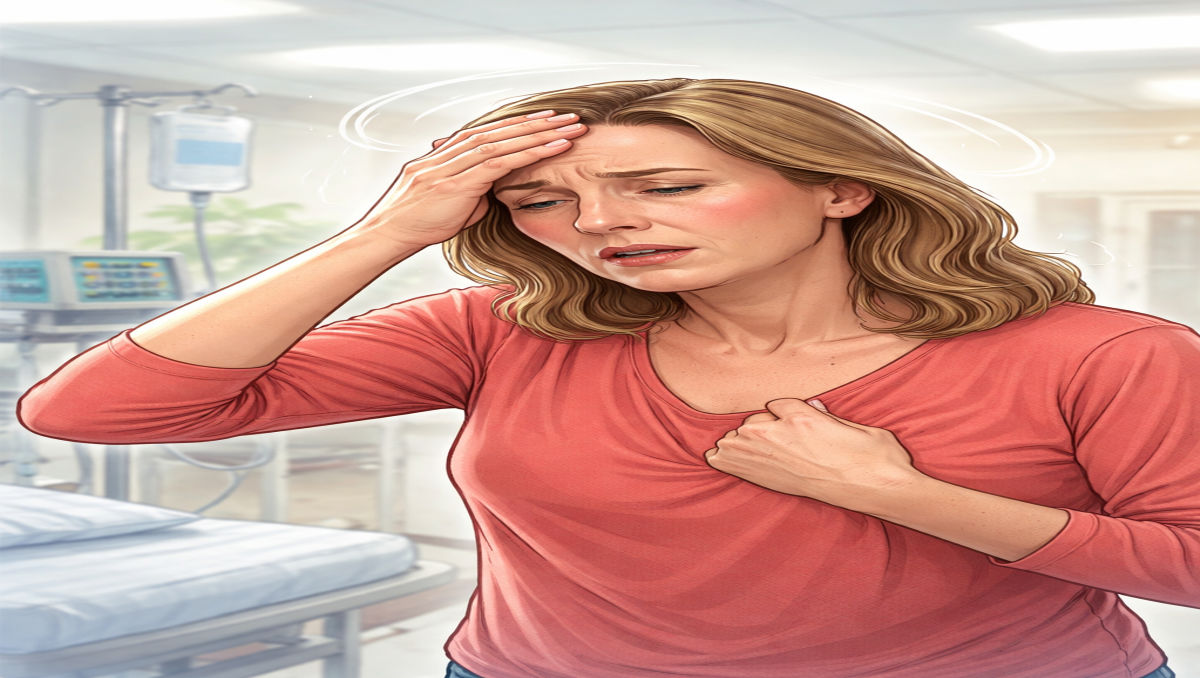
    Stroke warning signs in women often appear differently than many people expect. While facial drooping and arm weakness remain common, women frequently experience atypical symptoms such as nausea, sudden fatigue, confusion, or even unexplained hiccups. Because these stroke warning signs in women may seem subtle, they are often dismissed or misinterpreted.

    Many women delay seeking care because the symptoms do not match the “classic” stroke image. However, early recognition dramatically improves survival and recovery outcomes. Understanding stroke warning signs in women can prevent permanent disability and save lives.

    Women have unique biological and hormonal risk factors that influence how strokes present. As a result, stroke warning signs in women may be less obvious yet equally dangerous. Learning these differences is essential for faster response and better outcomes.

    What Are the Stroke Warning Signs in Women?

    Stroke warning signs in women include traditional symptoms such as facial drooping, arm weakness, and speech difficulty. However, women are more likely than men to experience atypical symptoms including sudden nausea, vomiting, dizziness, shortness of breath, hiccups, confusion, or unexplained fatigue.

    Because stroke warning signs in women may mimic anxiety, migraine, or stomach illness, they are sometimes overlooked. Immediate emergency evaluation is critical whenever sudden neurological symptoms appear. Time-sensitive treatment can significantly reduce brain damage.

    Why Stroke Warning Signs in Women Are Often Different

    The neurological mechanism of stroke is the same in both men and women. A stroke occurs when blood flow to part of the brain is blocked or when bleeding disrupts oxygen delivery. However, hormonal influences, smaller vessel anatomy, and cardiovascular differences contribute to variation in presentation.

    Estrogen fluctuations, pregnancy-related conditions, and autoimmune disorders may influence stroke risk in women. As a result, stroke warning signs in women can include systemic symptoms rather than isolated weakness. These differences can delay diagnosis if clinicians are not alert to atypical patterns.

    For individuals experiencing weakness after stroke, specialized paralysis treatment options may further enhance nerve repair and muscle activation.

    Understanding how the brain responds to oxygen loss is essential, and our detailed guide on brain and nerve recovery after stroke explains how neurological damage develops and heals over time.

    Furthermore, women are more likely to live alone in older age, which increases the risk of delayed emergency response. Recognizing stroke warning signs in women at the earliest stage improves survival rates and long-term neurological recovery.

    Stroke Warning Signs in Women: The 5 Phases of Symptom Development

    Stroke symptoms often progress rapidly, but understanding the phases can help identify early warning signs.

    Phase 1: Sudden Internal Discomfort
    Many women describe an abrupt feeling that something is “not right.” Stroke warning signs in women may begin with nausea, dizziness, or an unusual headache. These early symptoms may not include obvious weakness.

    Phase 2: Neurological Disruption
    Confusion, speech difficulty, or visual disturbances may develop. Women sometimes experience disorientation rather than slurred speech. These stroke warning signs in women are frequently mistaken for anxiety or dehydration.

    Phase 3: Motor Changes
    Traditional symptoms such as arm weakness or facial drooping may appear. However, they can be milder in some cases. Subtle motor impairment should never be ignored.

    Phase 4: Systemic Symptoms
    Shortness of breath, hiccups, chest discomfort, or fatigue may accompany neurological changes. Stroke warning signs in women may resemble cardiac symptoms or gastrointestinal illness.

    Phase 5: Rapid Deterioration
    If untreated, symptoms worsen quickly. Immediate emergency intervention during earlier phases prevents severe disability.

    Stroke Warning Signs in Women Compared to Men

    While both genders share core symptoms, women are statistically more likely to experience atypical presentations. Men often present with classic one-sided weakness and speech disturbance. In contrast, stroke warning signs in women frequently include nausea, generalized weakness, or altered mental status.

    Women also experience higher post-stroke disability rates. This may partly result from delayed recognition. Understanding gender-specific stroke warning signs in women reduces misdiagnosis and improves early intervention.

    Research published by the American Stroke Association highlights that women often arrive later to emergency departments due to symptom confusion. Early awareness can change outcomes dramatically.

    7 Critical Factors That Increase Stroke Risk in Women

    Certain risk factors uniquely influence stroke warning signs in women.

    Pregnancy and postpartum periods increase clotting risk. Hormonal contraceptives may elevate stroke probability in smokers. Migraine with aura is more common in women and associated with stroke risk.

    Autoimmune disorders, such as lupus, disproportionately affect women and increase vascular inflammation. Atrial fibrillation also presents differently in women and carries higher stroke severity risk. These conditions amplify the importance of recognizing stroke warning signs in women early.

    Research published in the National Library of Medicine highlights hormonal and cardiovascular influences unique to women.

    Early Treatment and Why Time Matters

    The phrase “time is brain” is medically accurate. Brain cells begin dying within minutes of oxygen deprivation. Rapid treatment with clot-dissolving medication or mechanical clot removal can restore blood flow.

    When stroke warning signs in women are recognized immediately, outcomes improve significantly. Delays of even one hour can increase long-term disability risk. Emergency services should be contacted at the first sign of sudden neurological change.

    The National Institute of Neurological Disorders and Stroke explains that brain oxygen deprivation begins damaging cells within minutes of circulation loss.

    According to the American Stroke Association, rapid intervention within the first hours significantly improves survival and neurological outcomes.

    According to the National Institute of Neurological Disorders and Stroke, early intervention reduces mortality and improves recovery potential. Education about stroke warning signs in women remains a public health priority.

    Long-Term Recovery Reality After Stroke in Women

    Women often experience more severe post-stroke disability than men. Recovery depends on stroke severity, location, and treatment timing. Early rehabilitation significantly improves mobility and cognitive function.

    Stroke warning signs in women that are ignored can lead to larger brain injury. However, structured therapy supports neuroplasticity and functional improvement. Emotional health also plays a vital role in long-term outcomes.

    Depression and anxiety are common after stroke, particularly among women. Comprehensive care addressing both physical and emotional recovery enhances overall prognosis.

    Can Stroke Warning Signs in Women Be Subtle but Serious?

    Yes, and this is one of the most dangerous aspects. Sudden unexplained fatigue, hiccups, or nausea may appear minor. However, when combined with confusion or dizziness, they can indicate brainstem involvement.

    Stroke warning signs in women sometimes affect the posterior circulation of the brain. These strokes may produce vertigo, imbalance, or swallowing difficulty rather than classic facial drooping. Immediate evaluation is essential when symptoms are sudden and unexplained.

    Ignoring subtle stroke warning signs in women increases the risk of permanent neurological damage.

    Women who notice sudden weakness should review these early signs of stroke-related arm paralysis to identify neurological emergencies quickly.

    Rehabilitation and Prevention Strategies

    After a stroke, rehabilitation focuses on restoring mobility, speech, and independence. Early therapy maximizes neuroplastic adaptation. Women may benefit from tailored rehabilitation addressing hormonal and cardiovascular factors.

    Preventive strategies include blood pressure control, cholesterol management, diabetes monitoring, and smoking cessation. Recognizing stroke warning signs in women early reduces recurrence risk. Lifestyle adjustments combined with medical management protect long-term brain health.

    Regular cardiovascular screenings are particularly important for women with migraine, autoimmune conditions, or pregnancy complications.

    Frequently Asked Questions

    What are the most common stroke warning signs in women?

    Stroke warning signs in women include facial drooping, arm weakness, speech difficulty, sudden confusion, nausea, dizziness, shortness of breath, and unexplained fatigue. Atypical symptoms may appear without obvious weakness.

    Can hiccups be a stroke symptom in women?

    Yes. Persistent unexplained hiccups can be one of the rare stroke warning signs in women, particularly in brainstem strokes. Medical evaluation is necessary when accompanied by neurological symptoms.

    Why are stroke warning signs in women often missed?

    Symptoms may resemble migraine, anxiety, or gastrointestinal illness. Because stroke warning signs in women can be subtle, they are sometimes dismissed until more severe deficits appear.

    Do younger women experience stroke warning signs differently?

    Younger women may present with headache, nausea, or visual disturbance. Hormonal factors and migraine history can influence stroke warning signs in women at younger ages.

    What should a woman do if stroke symptoms appear?

    Call emergency services immediately. Do not wait for symptoms to improve. Rapid treatment reduces long-term brain damage.

    Key Takeaway: Stroke Warning Signs in Women Require Immediate Action

    Stroke warning signs in women are not always dramatic. Sudden nausea, confusion, hiccups, or dizziness may indicate serious neurological disruption. Recognizing these symptoms early saves brain tissue and preserves function.

    Women must understand that atypical symptoms can still represent a life-threatening event. Immediate medical evaluation is the safest response. Delays increase disability risk.

    Strong Medical Conclusion

    Stroke warning signs in women differ from traditional expectations and may include subtle or atypical symptoms. Because women frequently experience nausea, confusion, shortness of breath, or unexplained fatigue, strokes are sometimes misdiagnosed or delayed.

    Understanding stroke warning signs in women empowers faster decision-making. Early recognition and emergency treatment dramatically improve survival and long-term recovery outcomes. Awareness remains the most powerful prevention tool.

    Medical Disclaimer

    This article is for educational purposes only and does not replace professional medical advice. If stroke warning signs in women appear, seek emergency medical care immediately.
  • How Long Does Paralysis Last After a Stroke? 7 Critical Recovery Facts You Must Know

    How Long Does Paralysis Last After a Stroke? 7 Critical Recovery Facts You Must Know

    How Long Does Paralysis Last After a Stroke? 7 Critical Recovery Facts You Must Know

    When paralysis follows a stroke, the first question families ask is clear and urgent: how long does paralysis last after a stroke? Behind that question lies fear about independence, mobility, and the possibility of permanent disability. Some people regain movement within weeks, while others require months of rehabilitation. In severe cases, paralysis may remain long-term, but even then, meaningful recovery is often possible.

    Understanding how long paralysis lasts after a stroke requires more than guessing a timeline. It involves examining stroke severity, emergency treatment timing, rehabilitation intensity, and the brain’s ability to reorganize itself. Most neurological recovery occurs within the first three to six months. However, improvement frequently continues beyond one year when therapy remains consistent.

    This guide explains exactly what determines recovery, what is realistic, and what you can expect.

    How Long Does Paralysis Last After a Stroke?

    Paralysis after a stroke can last from a few weeks to several months. Most recovery happens within the first 3–6 months. However, improvement may continue for 12 months or longer with structured rehabilitation. Severe strokes may result in long-term paralysis, but functional gains are still possible.

    Now let’s explore why timelines differ.

    Why People Ask: How Long Does Paralysis Last After a Stroke?

    Many families search for answers immediately after hospital admission. The uncertainty surrounding how long paralysis lasts after a stroke can create anxiety and confusion. While doctors cannot predict exact timelines, understanding recovery patterns provides realistic expectations. Knowing what influences recovery helps reduce fear and support informed decision-making.

    Families often ask how long does paralysis last after a stroke because uncertainty creates fear. While no doctor can give an exact timeline, understanding recovery stages provides clarity.

    Why Stroke Causes Paralysis

    A stroke interrupts blood flow to part of the brain. Without oxygen, neurons in the motor cortex begin to die within minutes. When these motor control areas are damaged, the brain can no longer send effective signals to muscles.

    Because motor pathways cross in the lower brainstem, a stroke affecting the left hemisphere typically causes weakness on the right side of the body, and vice versa. Partial weakness is called hemiparesis, while complete loss of movement is known as hemiplegia. The extent of motor cortex injury is the strongest predictor of how long paralysis lasts after a stroke.

    The National Institute of Neurological Disorders and Stroke explains how motor pathway injury disrupts voluntary movement control.

    To better understand how nerve signals are affected after stroke, read our detailed guide on brain and nerve recovery after stroke, which explains how neuroplasticity supports movement restoration.

    In the early stage, muscles may feel limp and unresponsive. Later, spasticity or stiffness can develop as the nervous system attempts to reorganize.

    This neurological damage is the primary reason people ask how long paralysis lasts after a stroke and whether movement can fully return.

    Emergency Treatment Directly Affects Recovery Time

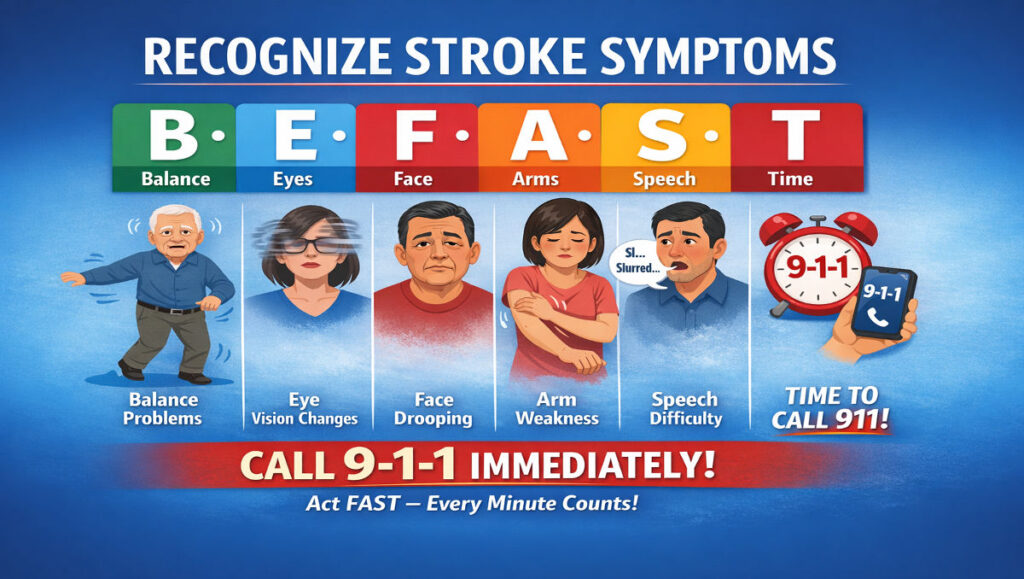
    How long paralysis lasts after a stroke is heavily influenced by how quickly medical treatment begins. The BE FAST warning signs – balance difficulty, eye or vision changes, facial drooping, arm weakness, speech difficulty, and time to call 911 – are critical because every minute matters.

    The National Institute of Neurological Disorders and Stroke explains how motor pathway injury disrupts voluntary movement control.According to the American Stroke Association, rapid intervention significantly improves long-term neurological outcomes.

    Rapid clot removal or bleeding control preserves brain tissue. The more motor neurons that survive, the shorter paralysis may last. As a result, early intervention remains one of the most powerful predictors of long-term recovery.

    The faster treatment begins, the shorter how long paralysis lasts after a stroke in many cases.The faster blood flow is restored, the shorter how long does paralysis last after a stroke in many patients.

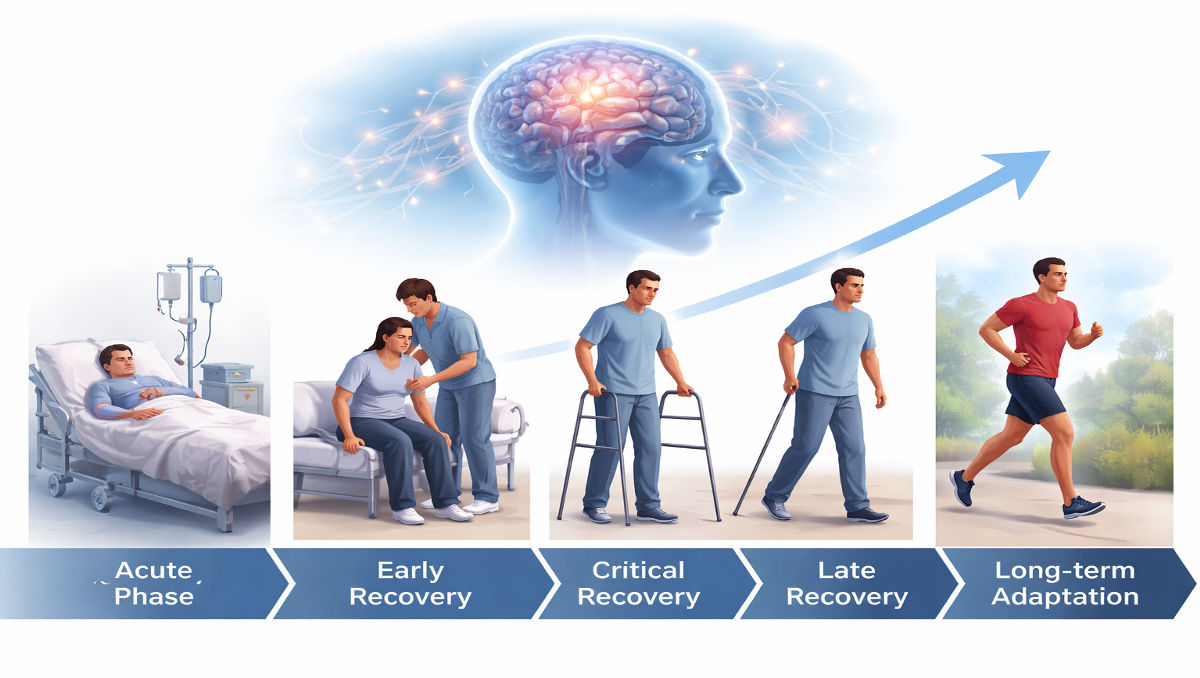
    How Long Does Paralysis Last After a Stroke? The 5 Recovery Phases

    Recovery after stroke follows biological phases rather than a fixed calendar.

    1. Acute Phase (First 72 Hours)

    Brain swelling and inflammation may temporarily worsen weakness. Some patients appear completely paralyzed during this stage but regain partial movement as swelling decreases. Early severity does not always predict final outcome.

    2. Early Recovery Phase (Weeks 1–4)

    The brain begins reorganizing. Nearby healthy neurons attempt to compensate for damaged areas. Small voluntary movements, such as finger twitching or improved sitting balance, may appear.

    3. Critical Neuroplastic Phase (Months 1–6)

    This is the most important recovery window. Neuroplasticity is strongest during this period, meaning the brain is highly responsive to repetitive therapy. Most functional gains occur within these first six months.

    Structured daily practice plays a major role during this phase, and these proven home exercises for stroke recovery can significantly support motor improvement.

    4. Late Recovery Phase (6–12 Months)

    Improvement continues but slows. Walking becomes smoother, coordination improves, and muscle control strengthens. Hand function may still be developing.

    5. Long-Term Adaptation (Beyond 1 Year)

    Recovery becomes gradual but does not stop. The brain retains lifelong adaptive potential when consistently stimulated.

    Clinical rehabilitation research published by the National Library of Medicine highlights the importance of repetitive task training in stroke recovery.

    For most patients asking how long paralysis lasts after a stroke, the first six months provide the clearest answer, but recovery often extends beyond that.

    Does Everyone Recover the Same Way After Stroke Paralysis?

    Not everyone experiences the same recovery speed. How long paralysis lasts after a stroke depends on brain injury location, severity, and rehabilitation intensity. Some individuals show rapid improvement, while others progress gradually over many months. Recovery is highly individual and influenced by consistent therapy.

    7 Critical Factors That Influence How Long Paralysis Lasts After a Stroke

    Understanding these seven factors helps set realistic expectations.

    1. Stroke Severity

    Smaller ischemic strokes generally allow faster recovery than large hemorrhagic strokes. The more extensive the motor cortex damage, the longer paralysis lasts after a stroke.

    2. Speed of Emergency Treatment

    Treatment within the first hour significantly reduces permanent injury. Delayed intervention increases long-term disability risk.

    3. Location of Brain Injury

    Damage to primary motor areas produces more severe paralysis than injury to secondary regions.

    4. Age and Neuroplasticity

    Younger brains often adapt more quickly, but meaningful recovery is possible at any age with structured therapy.

    5. Rehabilitation Intensity

    Daily, repetitive therapy dramatically improves outcomes. Inconsistent therapy often prolongs paralysis.

    6. Medical Stability

    Controlled blood pressure, stable glucose levels, and cardiovascular health support brain healing.

    7. Psychological Resilience

    Motivation, emotional support, and mental health significantly influence therapy participation and recovery speed.

    These factors collectively determine how long paralysis lasts after a stroke.

    How Long Does Paralysis Last After a Stroke in Mild, Moderate, and Severe Cases?

    In mild strokes, noticeable improvement may occur within weeks. Many patients regain substantial independence within three to six months. In moderate strokes, recovery often extends through the first year with gradual progress.

    Severe strokes involving extensive motor cortex damage may result in long-term impairment. However, even in severe cases, patients frequently regain partial movement or improved independence with sustained rehabilitation. Full recovery is not always guaranteed, but functional gains remain realistic.

    Can Stroke Paralysis Be Permanent? Understanding How Long Paralysis Lasts After a Stroke

    Yes, paralysis can become permanent when large motor regions are irreversibly damaged. However, even in cases of long-term impairment, improvement may still occur.

    Modern therapies such as constraint-induced movement therapy, robotic-assisted rehabilitation, and functional electrical stimulation stimulate alternative neural pathways. These advanced methods aim to reduce how long paralysis lasts after a stroke and maximize independence.

    Permanent does not always mean unchangeable.

    Arm Versus Leg Recovery

    Leg function often returns earlier than hand coordination. Walking depends on broader neural circuits, while fine hand movement requires highly specialized pathways. As a result, arm paralysis frequently lasts longer than leg paralysis.

    This difference is normal and does not necessarily indicate poor recovery. With consistent upper limb therapy, hand function may continue improving over many months.

    Whole-Person Recovery

    Physical healing is only one part of stroke recovery. Depression and anxiety are common and may reduce therapy participation. Addressing emotional health improves rehabilitation outcomes.

    In addition, nutrition plays a supportive role. A heart-healthy diet, proper hydration, and medical monitoring protect brain and vascular health. Recovery is strongest when physical, emotional, and medical care are coordinated.

    Emotional health indirectly affects how long paralysis lasts after a stroke because motivation drives therapy participation.

    Signs That Recovery Is Progressing

    Small improvements often appear before major movement returns. Muscle twitching, reduced stiffness, slight voluntary contraction, and improved balance indicate neurological reconnection.

    Plateaus are common but rarely permanent. Adjusting therapy strategies often restarts progress.

    Frequently Asked Questions

    How long does paralysis last after a stroke in mild cases?

    In mild strokes, improvement may begin within weeks. Many patients regain independence within three to six months.

    Can paralysis improve after two years?

    Yes. Although recovery slows, continued therapy can still produce functional gains years later.

    Is full recovery possible after stroke paralysis?

    Full recovery depends on stroke severity and rehabilitation intensity. Some individuals regain near-normal function, while others achieve partial but meaningful improvement.

    When Does Stroke Recovery Stop and How Long Does Paralysis Last After a Stroke?

    Recovery does not abruptly stop at six months. While the fastest gains occur early, improvement may continue beyond one year with consistent therapy.

    What Doctors Consider When Predicting How Long Paralysis Lasts After a Stroke

    Neurologists evaluate imaging results, muscle response, and early movement signs to estimate how long paralysis lasts after a stroke. Early return of voluntary movement often predicts better outcomes. However, predictions are based on probability rather than certainty. Ongoing rehabilitation can change initial expectations.

    Final Medical Perspective on How Long Does Paralysis Last After a Stroke

    So, how long does paralysis last after a stroke? For most survivors, meaningful recovery occurs within three to six months. Continued improvement frequently extends up to one year or longer. In severe strokes, some degree of paralysis may persist, but structured rehabilitation significantly influences outcomes.

    Ultimately, how long paralysis lasts after a stroke is determined by early intervention, rehabilitation intensity, and individual neurological healing capacity. While most recovery occurs within the first six months, continued improvement remains possible beyond one year. Every recovery journey is unique, but structured therapy significantly influences long-term outcomes.

    Key Takeaway: How Long Does Paralysis Last After a Stroke in Most Cases?

    For most survivors, how long does paralysis last after a stroke depends on early treatment and rehabilitation intensity. Significant recovery usually occurs within the first three to six months. However, continued improvement can extend beyond one year with consistent therapy. Every recovery timeline varies based on brain healing and structured intervention.

    Medical Disclaimer

    This content is for educational purposes only and does not replace professional medical advice. If stroke symptoms occur, seek emergency medical care immediately.
  • 7 Proven Home Exercises for a Paralyzed Arm After Stroke 2026

    7 Proven Home Exercises for a Paralyzed Arm After Stroke 2026

    7 Proven Home Exercises for a Paralyzed Arm After Stroke 2026

    When Your Arm Won’t Move — And You Don’t Know What Comes Next

    The hospital room feels quiet.
    You look at your arm and tell it to move. Nothing happens.
    It feels heavy. Foreign. Unfamiliar.
    Just days ago, you were living normally. Now even lifting a spoon feels impossible.
    If you’re searching for the best home exercises for a paralyzed arm after stroke, you’re likely looking for something more than instructions. You’re looking for hope and a clear path forward.
    This guide gives you both.

    Do Home Exercises for a Paralyzed Arm After Stroke Really Help?

    Yes. Structured and consistent home exercises for a paralyzed arm after stroke can significantly improve strength, coordination, and functional use of the arm. Repetitive movement stimulates neuroplasticity , the brain’s ability to form new neural pathways after injury. When combined with professional therapy, daily stroke arm recovery exercises at home play a crucial role in restoring mobility and independence.
    Most improvement occurs in the first 3–6 months, but recovery can continue beyond a year with persistent practice.

    Stroke in the United States: Why Early Arm Recovery Matters

    According to the American Stroke Association, a stroke occurs every 40 seconds in the United States. Arm weakness or paralysis is one of the most common long-term effects.

    According to the American Stroke Association, stroke remains a leading cause of long-term disability in America.

    Early rehabilitation improves outcomes. That includes professional therapy and carefully performed home exercises for a paralyzed arm after stroke.

    Recognize Stroke Symptoms: BE FAST

    BE FAST stroke symptoms infographic showing balance problems, vision changes, face drooping, arm weakness, speech difficulty, and instruction to call 911 immediately.
    BE FAST stroke warning signs: Balance problems, Eye vision changes, Face drooping, Arm weakness, Speech difficulty — Time to call 911 immediately.

    What Happens to the Arm After a Stroke?

    Arm paralysis often follows stages:

    • Flaccid phase: The arm feels limp and weak.
    • Spastic phase: Muscles may become tight or stiff.
    • Coordination phase: Movement slowly begins returning.

    The Mayo Clinic explains that recovery depends on stroke severity, location, and rehabilitation intensity.
    Think of the brain like a circuit board. When part of it is damaged, signals to the arm are disrupted. Repetition through stroke arm rehabilitation exercises helps the brain build alternative pathways.

    Clinical guidance from the Mayo Clinic explains that early rehabilitation significantly improves motor outcomes.

    7 Best Home Exercises for a Paralyzed Arm After Stroke

    These evidence-based home exercises for a paralyzed arm after stroke are commonly recommended in U.S. rehabilitation programs. Perform gently and consistently.

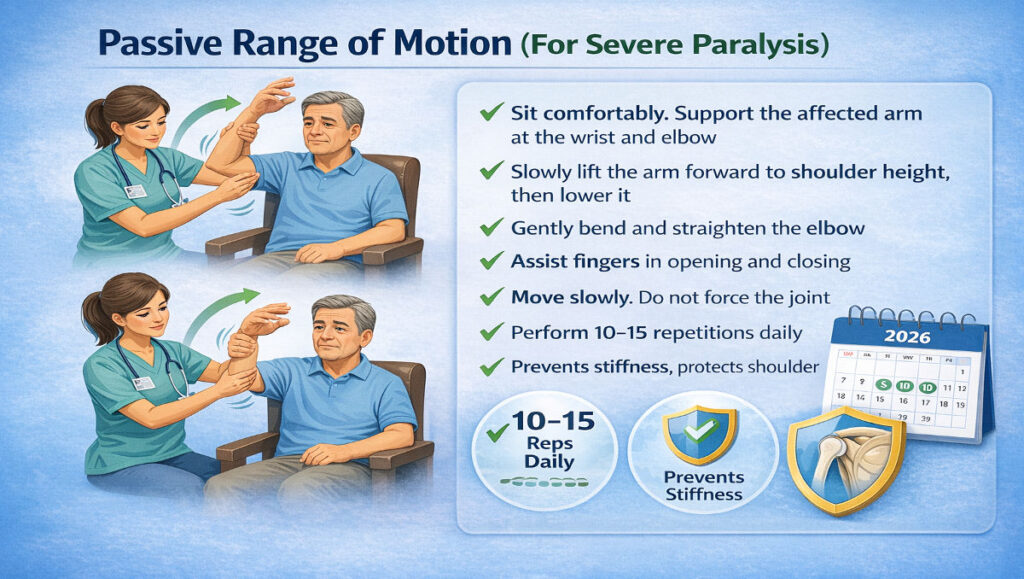
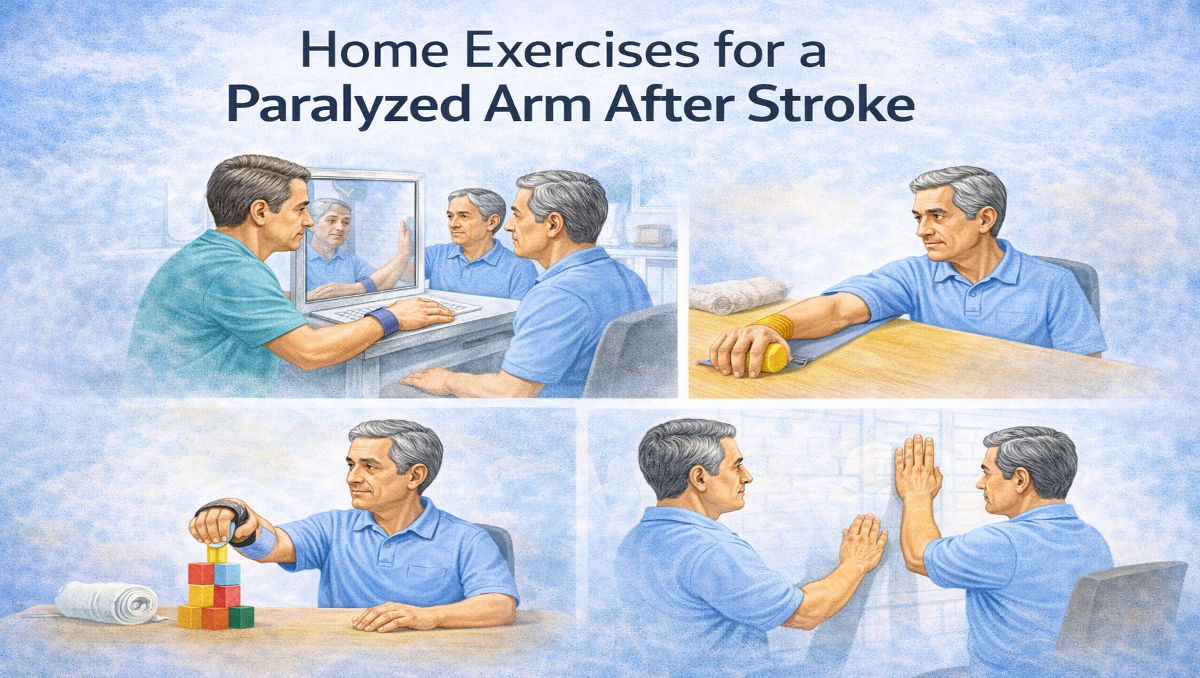
    1. Passive Range of Motion (For Severe Paralysis)

    Passive range of motion technique demonstrated as part of home exercises for a paralyzed arm after stroke, showing assisted shoulder and elbow movement to prevent stiffness
    Passive range of motion is one of the most important home exercises for a paralyzed arm after stroke. It helps maintain flexibility, prevent stiffness, and protect the shoulder joint during early recovery.

    This is the foundation of early stroke arm recovery exercises.
    Sit comfortably. Support the affected arm at the wrist and elbow with your stronger hand. Slowly lift the arm forward to shoulder height, then lower it. Gently bend and straighten the elbow. Assist fingers in opening and closing.
    Move slowly. Do not force the joint.
    Perform 10–15 repetitions daily.
    This prevents stiffness and protects the shoulder.

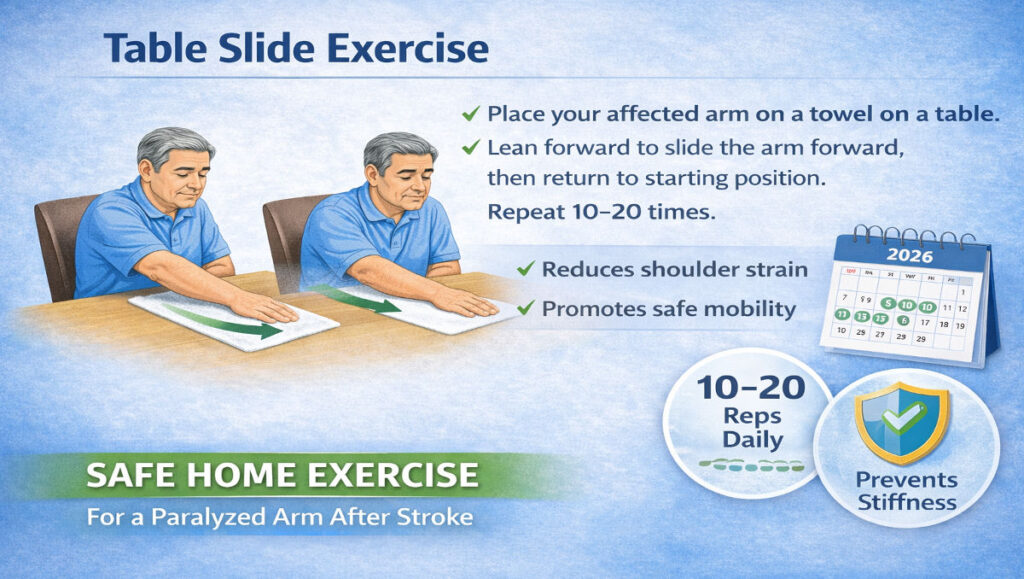
    2. Table Slide Exercise

    Table slide movement demonstrated as one of the home exercises for a paralyzed arm after stroke, showing the affected arm sliding forward on a towel to improve shoulder mobility.
    The table slide exercise is a safe and effective part of home exercises for a paralyzed arm after stroke. It promotes controlled shoulder movement, reduces strain, and supports early stroke arm rehabilitation.

    Place your affected arm on a towel on a table.
    Lean forward slightly to slide the arm forward, then return to starting position. Keep the movement controlled and smooth.
    Repeat 10–20 times.
    Table slides are among the safest home exercises for a paralyzed arm after stroke because they reduce shoulder strain while promoting mobility.

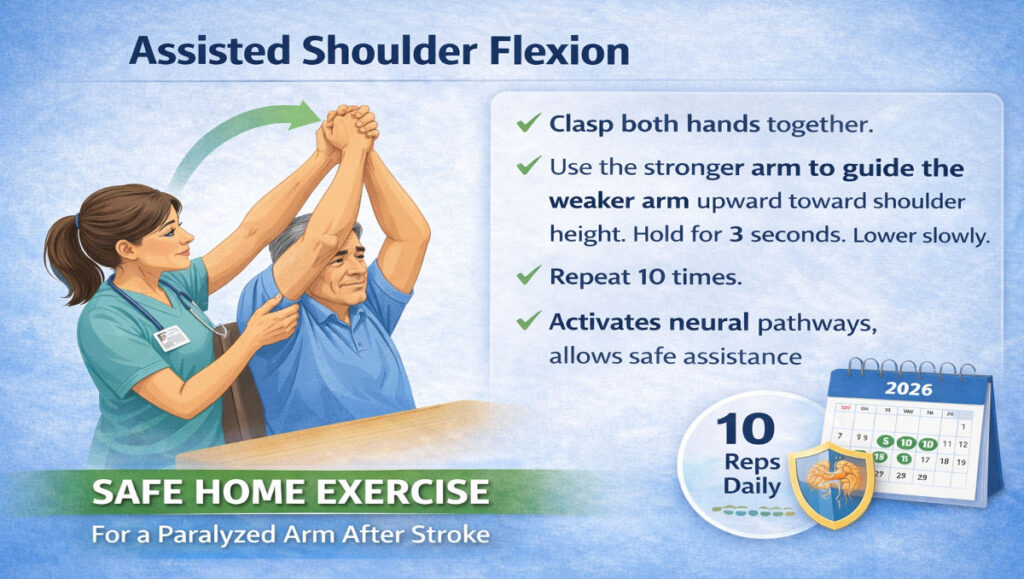
    3. Assisted Shoulder Flexion

    Assisted shoulder flexion demonstrated as one of the home exercises for a paralyzed arm after stroke, showing both hands clasped together to lift the affected arm safely.
    Assisted shoulder flexion is a safe and effective part of home exercises for a paralyzed arm after stroke. The stronger arm guides the weaker arm upward, helping activate neural pathways and support early stroke arm recovery.

    Clasp both hands together.
    Use the stronger arm to guide the weaker arm upward toward shoulder height. Hold for 3 seconds. Lower slowly.
    Repeat 10 times.
    This exercise activates neural pathways while allowing safe assistance.

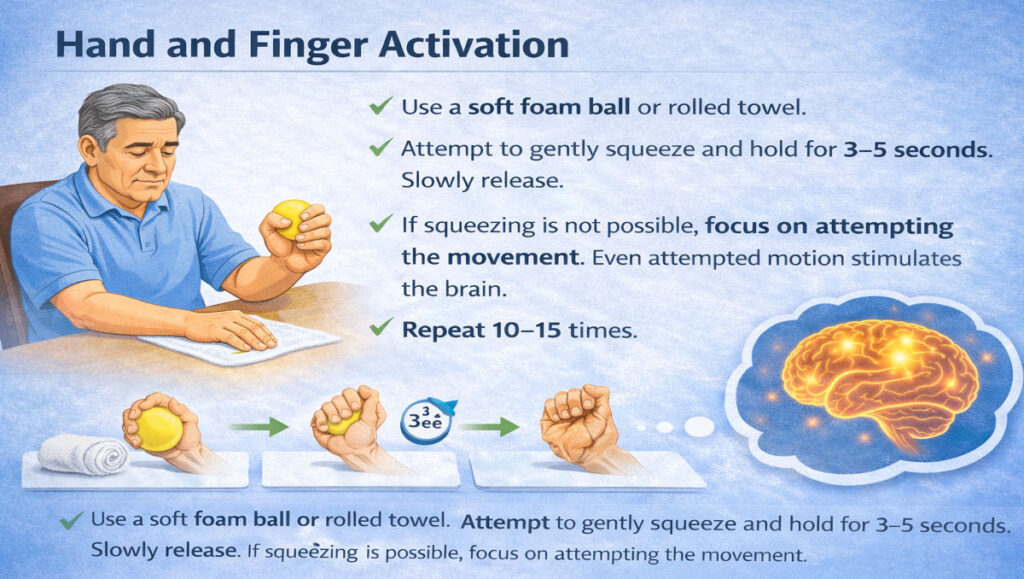
    4. Hand and Finger Activation

    Hand and finger activation exercise using a soft foam ball as part of home exercises for a paralyzed arm after stroke, demonstrating gentle squeezing to improve grip strength and motor recovery.
    Hand and finger activation is one of the most important home exercises for a paralyzed arm after stroke. Gently squeezing a soft ball helps stimulate neural pathways, improve grip strength, and support gradual stroke arm rehabilitation.

    Use a soft foam ball or rolled towel.
    Attempt to gently squeeze and hold for 3–5 seconds. Slowly release.
    If squeezing is not possible, focus on attempting the movement. Even attempted motion stimulates the brain.
    Repeat 10–15 times.
    Finger control is often the slowest to return, making this one of the most important stroke arm rehabilitation exercises.

    5. Wall Walking

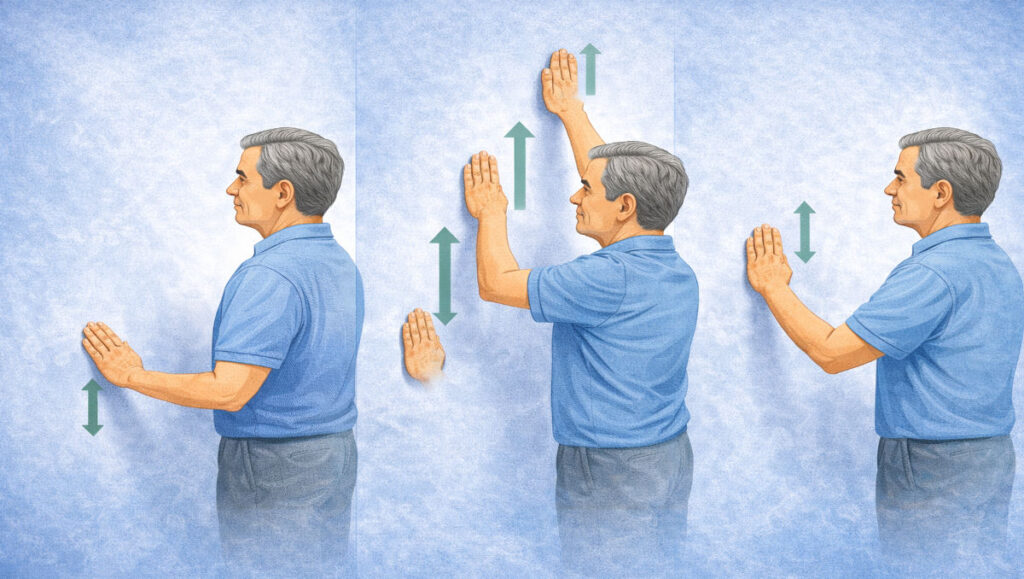
    Wall walking movement demonstrated as part of home exercises for a paralyzed arm after stroke, showing fingertips walking upward on a wall to improve shoulder strength and control.
    Wall walking is a safe and effective part of home exercises for a paralyzed arm after stroke. Slowly walking the fingers up and down the wall helps strengthen the shoulder, improve coordination, and support gradual stroke arm recovery.

    Stand facing a wall.
    Place fingertips of the affected hand on the wall at waist height. Slowly “walk” fingers upward as far as possible. Pause briefly, then walk back down.
    Repeat 8–12 times.
    This strengthens the shoulder and improves control.

    6. Mirror Therapy for Arm Recovery

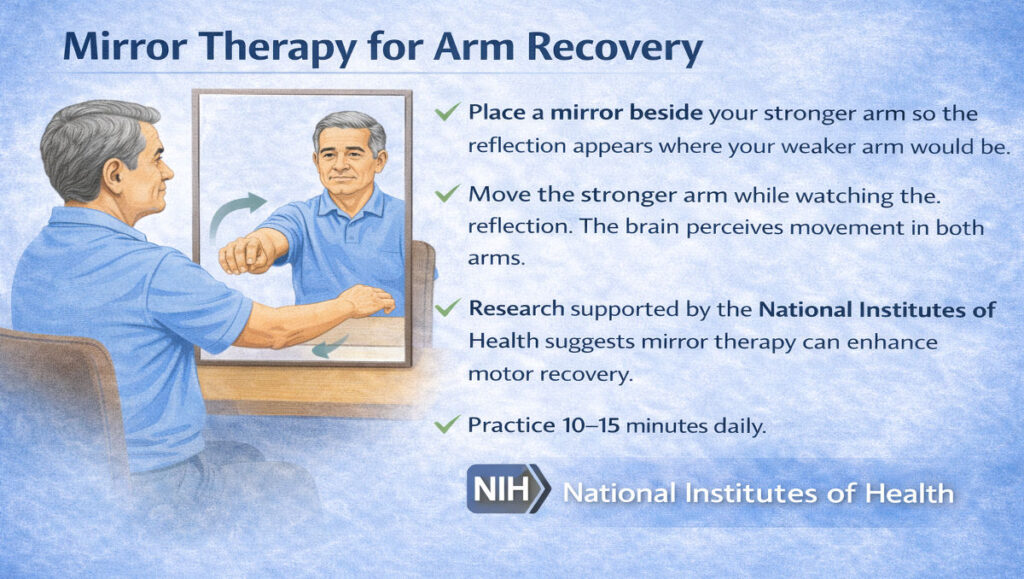
    Mirror therapy exercise shown as part of home exercises for a paralyzed arm after stroke, where the stronger arm moves in front of a mirror to stimulate recovery in the weaker arm.
    Mirror therapy is a powerful addition to home exercises for a paralyzed arm after stroke. By watching the stronger arm move in a mirror, the brain perceives movement in the affected arm, helping improve motor recovery and coordination.

    Place a mirror beside your stronger arm so the reflection appears where your weaker arm would be.
    Move the stronger arm while watching the reflection. The brain perceives movement in both arms.
    Research supported by the National Institutes of Health suggests mirror therapy can enhance motor recovery.
    Practice 10–15 minutes daily.

    7. Functional Task Repetition

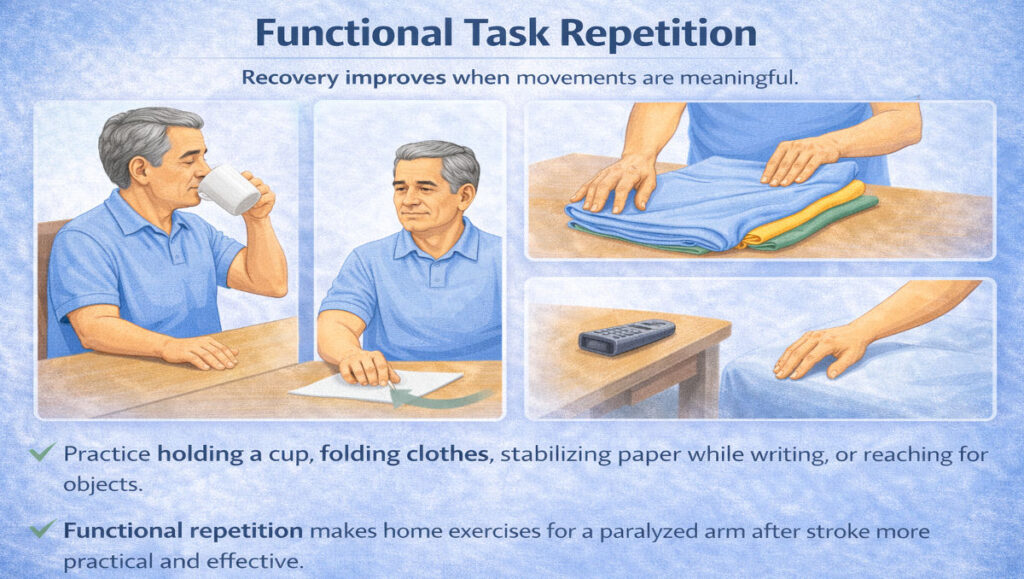
    Functional task repetition demonstrated as part of home exercises for a paralyzed arm after stroke, showing daily activities like holding a cup, folding clothes, writing, and reaching to improve arm recovery.
    Functional task repetition is an essential part of home exercises for a paralyzed arm after stroke. Practicing real-life activities such as holding a cup, folding clothes, and reaching for objects helps improve coordination, strength, and practical arm recovery.

    Recovery improves when movements are meaningful.
    Practice holding a cup, folding clothes, stabilizing paper while writing, or reaching for objects.
    Functional repetition makes home exercises for a paralyzed arm after stroke more practical and effective.

    How Often Should You Do Stroke Arm Exercises?

    Experts recommend 20–45 minutes of daily structured practice.
    Short sessions are acceptable if fatigue occurs.
    Consistency builds neuroplasticity.
    Intensity is less important than repetition.

    Recovery Timeline for Arm Function

    0–3 months: Rapid neurological changes occur.
    3–6 months: Noticeable strength improvements.
    6–12 months: Gradual functional gains.
    1+ year: Continued progress possible with structured practice.
    Home exercises for a paralyzed arm after stroke remain beneficial even beyond the first year.

    Arm improvement depends heavily on how well the brain rebuilds its signaling pathways, which we explain step by step inour comprehensive brain and nerve recovery guide.

    Modern Stroke Rehabilitation Options in the U.S.

    Advanced therapies include:

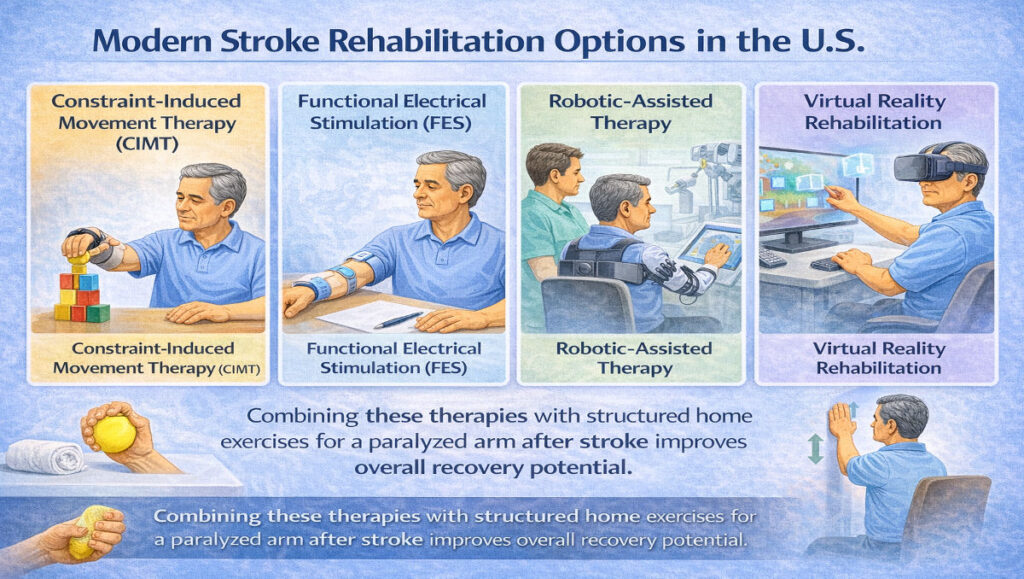
    Modern stroke rehabilitation therapies including CIMT, functional electrical stimulation, robotic-assisted therapy, and virtual reality combined with home exercises for a paralyzed arm after stroke to improve recovery.
    Modern stroke rehabilitation options such as CIMT, FES, robotic-assisted therapy, and virtual reality work best when combined with structured home exercises for a paralyzed arm after stroke, helping improve strength, coordination, and overall recovery potential.
    • Constraint-Induced Movement Therapy (CIMT)
    • Functional Electrical Stimulation (FES)
    • Robotic-assisted therapy
    • Virtual reality rehabilitation

    Combining these with structured home exercises for a paralyzed arm after stroke improves overall recovery potential.

    Common Complications to Watch

    Shoulder pain ,Joint stiffness ,Spasticity ,Swelling, Learned non-use

    Early attention prevents long-term problems.

    Whole-Person Recovery

    Physical recovery is only part of the journey.
    Depression and frustration are common. Emotional support improves participation in stroke arm recovery exercises.
    Nutrition patterns like DASH or Mediterranean diets support vascular health.
    Family encouragement increases consistency.

    Frequently Asked Questions

    Can a paralyzed arm fully recover after stroke?

    Recovery varies. Many individuals regain partial or significant function with consistent therapy and home exercises.

    How long does it take?

    Most recovery occurs in the first 3–6 months, but progress can continue beyond a year.

    Are home exercises for a paralyzed arm after stroke enough?

    They are essential but work best when combined with professional therapy.

    What if there is no movement yet?

    Continue passive exercises and mirror therapy. Neural changes may occur before visible movement appears.

    Does age affect recovery?

    Age may influence speed, but improvement is still possible.

    Key Takeaways

    Consistent home exercises for a paralyzed arm after stroke stimulate neuroplasticity and improve strength. Early repetition is critical. Small improvements signal progress. Structured home practice combined with professional care offers the best recovery outcomes.

    When to Seek Professional Help

    Consult your neurologist if pain increases, swelling develops, or movement suddenly worsens.

    Medical Disclaimer

    This article is for educational purposes only and does not replace professional medical advice. Call 911 immediately if stroke symptoms occur.