
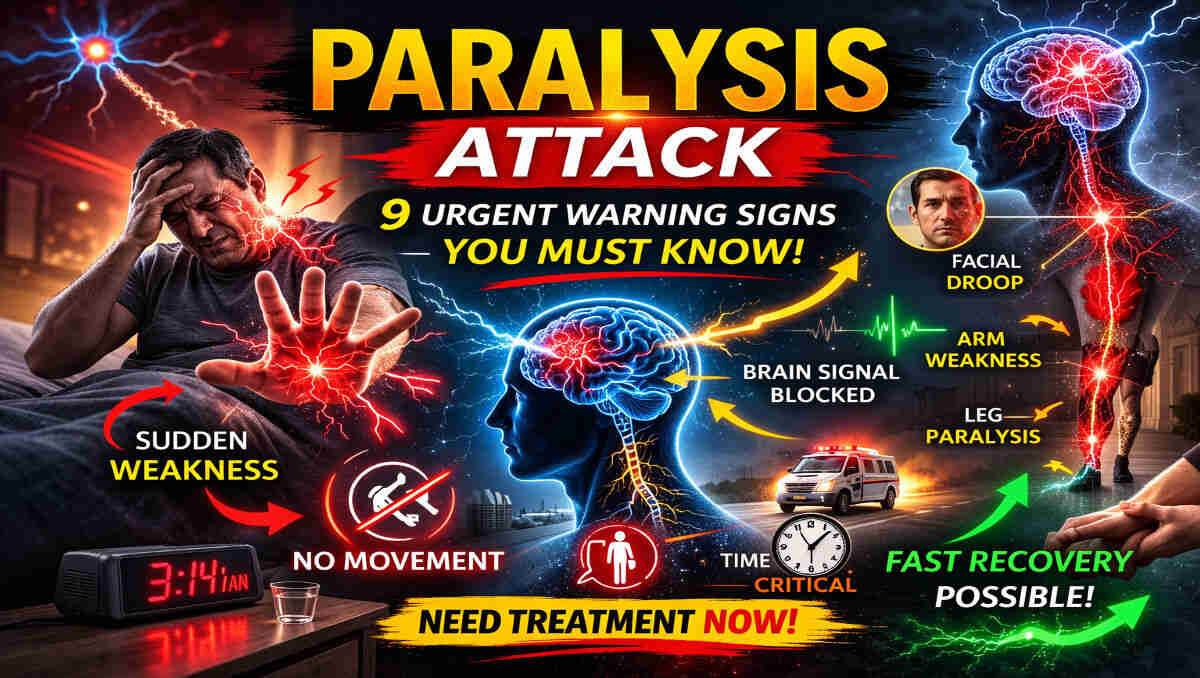
Paralysis Attack: 9 Urgent Facts and the Complete Recovery Model
A paralysis attack is one of the most terrifying experiences a person can face. One moment you are walking, talking, or holding something normally. The next moment your arm feels weak. Your leg does not respond. Your face droops. Speech becomes unclear. The body suddenly refuses to obey the brain. Panic rises immediately because movement feels automatic until it suddenly disappears.
During a paralysis attack, the mind may remain clear while the body loses strength or control. This sudden disconnect between intention and movement creates intense fear. Many people think they are having a fatal event. Others worry that the condition will never improve.
Fear is natural. However, understanding what a paralysis attack truly is replaces fear with action. When knowledge is clear, decisions become faster. Faster action protects life and recovery potential.
This article explains what a paralysis attack is, why it happens, how dangerous it is, what to do immediately, and how to build a structured recovery pathway.
What Is a Paralysis Attack?
A paralysis attack is a sudden loss of voluntary muscle movement caused by interruption of nerve signals between the brain and the muscles. The brain controls movement by sending electrical signals through nerves. When these signals are blocked, weakened, or disrupted, muscles cannot respond.
A paralysis attack may affect one side of the body, one limb, or multiple limbs. The severity depends on the cause and the location of nerve disruption.
A paralysis attack is not a disease on its own. It is a symptom of an underlying neurological or vascular problem. The most common cause is stroke, but spinal cord injury, nerve compression, metabolic imbalance, and certain neurological disorders can also trigger a paralysis attack.
Understanding the underlying cause determines the outcome and treatment approach.
What Happens Inside the Brain During a Paralysis Attack?
To understand a paralysis attack, it is important to understand brain signaling. The motor cortex in the brain sends movement commands to muscles through the spinal cord and peripheral nerves. This pathway must remain intact for voluntary movement to occur.
During a paralysis attack caused by stroke, blood flow to a specific brain region becomes blocked or reduced. Brain cells in that area lose oxygen. Within minutes, signal transmission weakens or stops completely.
When the motor cortex or its pathways are affected, the body part controlled by that region becomes weak or immobile. For example, if the left side of the brain is affected, the right side of the body may lose strength.
In spinal cord injuries, signals cannot travel past the damaged area. In nerve disorders, peripheral nerves fail to transmit signals properly.The paralysis attack reflects interruption in the communication system of movement.
The Most Common Cause: Stroke-Induced Paralysis Attack
A stroke is the leading cause of sudden paralysis attack in adults. A stroke occurs when blood supply to part of the brain is interrupted due to a clot or bleeding.
Brain tissue depends on oxygen. Without oxygen, cells begin to die quickly. If the damaged region controls movement, paralysis appears suddenly.
Common signs of a stroke-related paralysis attack include facial drooping, arm weakness, speech difficulty, sudden confusion, vision disturbance, or severe headache.
Time is critical. Immediate emergency care can dissolve clots or control bleeding, reducing permanent damage. Every minute matters during a paralysis attack caused by stroke.
If your paralysis attack is related to stroke and muscle weakness, early structured support becomes critical. Our specialized Paralysis Treatment in Virupakshipuram focuses on nerve stimulation, circulation improvement, and gradual strength rebuilding to protect recovery momentum.
According to the American Stroke Association, sudden weakness on one side of the body is one of the most critical stroke warning signs. You can review official emergency guidance here:
Other Causes of Paralysis Attack
Although stroke is common, other causes must be considered. Severe nerve compression can lead to sudden weakness. Spinal cord trauma interrupts movement signals below the injury level. Certain infections, such as viral nerve inflammation, may produce temporary paralysis attack episodes.
Electrolyte imbalances, particularly low potassium levels, may trigger sudden muscle weakness known as periodic paralysis. Autoimmune conditions like Guillain-Barré syndrome can cause rapid onset weakness affecting multiple limbs.
Because causes vary, medical evaluation is essential after any paralysis attack.
Is a Paralysis Attack Life-Threatening?
A paralysis attack itself does not always mean death. However, when caused by stroke or severe neurological injury, it can be life-threatening if not treated immediately.
The danger depends on the underlying cause. A minor nerve compression episode may not threaten life. A large stroke affecting vital brain areas can be fatal if untreated.
The safest response to any sudden paralysis attack is immediate emergency evaluation. Early treatment protects both survival and long-term function.Ignoring symptoms increases risk.
Immediate Action Plan During a Paralysis Attack
When a paralysis attack occurs suddenly, emergency services must be contacted immediately. Do not wait for symptoms to improve.
Observe whether the person can smile evenly. Check whether both arms can be raised. Listen for speech clarity. Sudden weakness or speech change requires urgent care.
Keep the person calm and lying safely. Do not give food or drink if swallowing is impaired. Monitor breathing and consciousness.
Early hospital treatment significantly improves recovery outcome.
Early vs Delayed Treatment: The Critical Difference
The first hours after a paralysis attack determine long-term recovery. In stroke cases, clot-dissolving medication may restore blood flow if administered within a narrow time window.
When treatment is delayed, brain tissue damage expands. Muscle weakness becomes more severe. Rehabilitation becomes more difficult.
Early treatment preserves neural pathways. Preserved pathways increase recovery potential. Delayed treatment allows irreversible damage to spread.
Every minute without action reduces recovery probability.
The Paralysis Attack Recovery Blueprint Model
Recovery after a paralysis attack follows a structured pathway. The first stage is medical stabilization. Blood flow must be restored or inflammation controlled. Vital signs must be stabilized.
The second stage is early mobilization. Even passive movement helps prevent muscle stiffness and improves circulation.
The third stage focuses on neuroplasticity activation. The brain has the ability to reorganize itself. Repeated guided movement stimulates new neural connections.
The fourth stage is strength rebuilding. Muscles that remain inactive shrink. Gradual strengthening exercises restore tone.
The fifth stage is functional training. Patients relearn everyday tasks such as holding objects, walking, or speaking clearly.
The sixth stage is long-term maintenance. Continued therapy prevents regression and improves independence.
Recovery is not random. It follows a structured neurological rebuilding process.
Recovery does not improve with random exercises or guesswork. Families who want a clear daily structure can follow our Complete Brain & Nerve Recovery Guide, designed specifically for stroke and paralysis patients. It provides stage-based exercise structure, diet guidance, and prevention planning.
Neuroplasticity: The Science Behind Recovery
Neuroplasticity is the brain’s ability to adapt after injury. When one pathway is damaged, nearby neurons may reorganize to compensate. Repetition strengthens these new pathways.
Early and consistent rehabilitation enhances neuroplasticity. Intensive therapy during the first three months produces stronger improvement.
Without structured stimulation, neural pathways weaken further. The brain needs repetition to rebuild communication.
This is why disciplined therapy is essential after a paralysis attack.
The National Institute of Neurological Disorders explains how neuroplasticity allows the brain to reorganize after injury.
Psychological Impact of a Paralysis Attack
A paralysis attack affects more than muscles. It affects identity and confidence. Patients may fear recurrence. Anxiety and depression are common after stroke-related paralysis.
Emotional recovery is part of physical recovery. Family support, counseling, and structured guidance improve motivation. Motivation increases participation in therapy. Participation increases recovery.
Hope combined with structured action produces measurable improvement.
Long-Term Outlook After a Paralysis Attack
Recovery depends on severity and speed of intervention. Some individuals regain full function. Others regain partial strength and adapt successfully.Improvement may continue for months or even years. The pace slows over time but does not stop completely.
Consistent therapy remains important even after initial improvement. Maintenance prevents muscle wasting and joint stiffness.Long-term commitment determines independence.
Preventing Future Paralysis Attacks
Preventing another paralysis attack requires controlling risk factors. High blood pressure significantly increases stroke risk. Diabetes and high cholesterol damage blood vessels. Smoking increases clot formation risk.
Regular medical monitoring reduces future risk. Healthy diet and physical activity improve circulation. Stress management supports cardiovascular stability.Prevention is part of recovery planning.
When Is a Paralysis Attack Temporary?
Some paralysis attack episodes are temporary. Transient ischemic attack, often called a mini-stroke, produces short-term weakness that resolves quickly. However, it is a warning sign of future stroke risk.
Electrolyte imbalance may cause temporary weakness that reverses with correction.Even temporary episodes require evaluation to prevent future severe events.
Some people confuse temporary paralysis attack symptoms with sleep-related paralysis episodes. If you want to understand the difference clearly, read our detailed explanation here:what is sleep paralysis?
And if you are experiencing night time episodes, see our complete recovery framework here:cure for sleep paralysis .
Complications Without Proper Recovery
Without rehabilitation, muscles weaken permanently. Joint contractures develop. Circulation slows, increasing clot risk. Swallowing difficulty may cause nutritional issues.Structured rehabilitation reduces these complications.Ignoring therapy reduces independence.
Final Medical Conclusion
A paralysis attack is a sudden interruption of movement caused by disruption of nerve signals between the brain and muscles. The most common cause is stroke, but other neurological conditions can also trigger it.
Immediate medical care protects life and function. Early treatment improves recovery outcome. Structured rehabilitation activates neuroplasticity and strengthens muscles gradually.
Fear is understandable, but knowledge provides direction. A paralysis attack demands urgent action followed by disciplined recovery planning.Movement may be lost suddenly, but structured recovery rebuilds strength step by step.
Key Takeaway
A paralysis attack requires immediate emergency evaluation. Early intervention protects brain tissue. Structured rehabilitation strengthens recovery. Prevention reduces recurrence risk.
Fast response saves function. Consistent effort restores independence.
Medical Disclaimer
This content is for educational purposes only and does not replace professional medical advice. If you experience sudden weakness or signs of paralysis attack, seek emergency medical care immediately.