
What Causes a Stroke? 9 Critical Reasons Brain Blood Flow Suddenly Stops
What causes a stroke is one of the most important medical questions families search for when someone suddenly develops weakness, slurred speech, or paralysis. A stroke occurs when blood flow to the brain becomes interrupted, preventing brain cells from receiving oxygen and nutrients that are necessary for survival. When oxygen supply stops, brain cells begin to weaken quickly and may die within minutes, which can lead to paralysis, memory loss, speech problems, and permanent neurological damage.
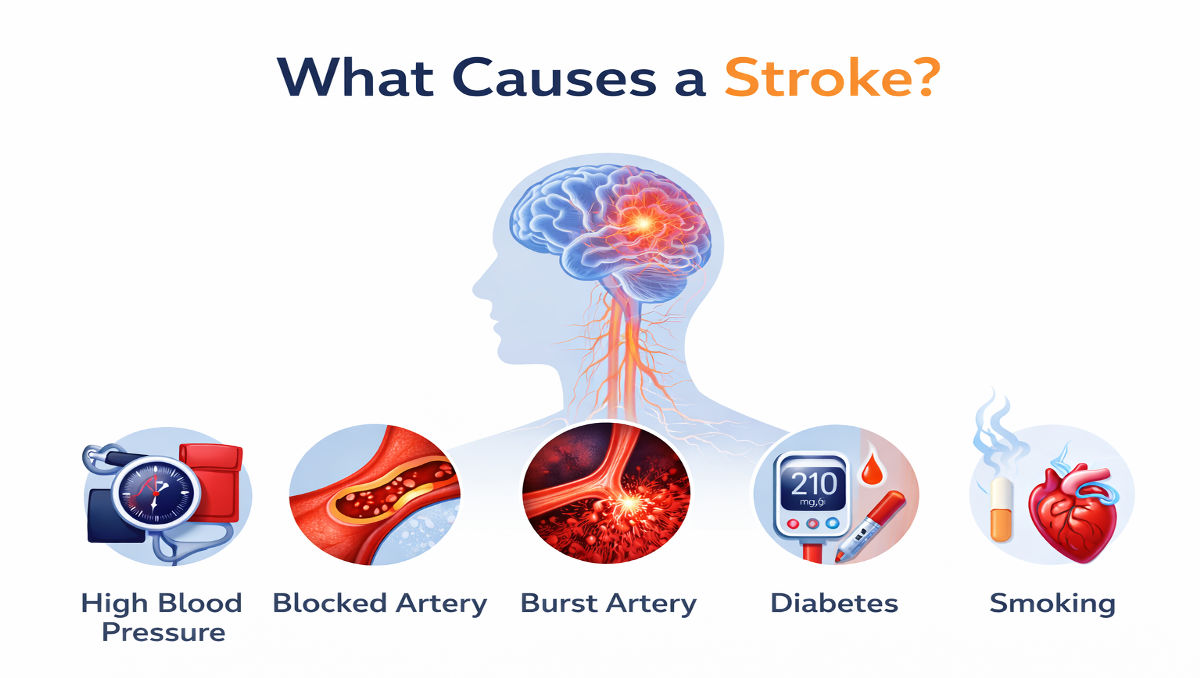
Many people believe stroke happens without warning, but in reality the body usually develops risk factors over time. High blood pressure, unhealthy blood vessels, diabetes, smoking, and circulation problems can slowly damage arteries that supply the brain. Eventually a clot may block the vessel or a weakened vessel may rupture, causing sudden interruption of blood flow.
Understanding what causes a stroke helps families recognize risk factors early and take preventive steps before brain damage occurs. Knowledge about stroke also allows people to recognize warning signs quickly so that emergency medical care can begin immediately.
Stroke is not simply a temporary illness. It is a neurological crisis that affects the brain, the body, and a person’s independence. When families understand what causes a stroke, they become better prepared to protect brain health and support recovery if a stroke occurs.
What Causes a Stroke and How Blood Supply to the Brain Fails
To understand what causes a stroke, it is necessary to understand how the brain depends on blood circulation. The brain requires a constant supply of oxygen-rich blood to function properly. Blood vessels carry oxygen and nutrients from the heart to brain tissue through a network of arteries.
When a stroke occurs, this supply system becomes disrupted. In many cases a clot blocks the artery that supplies a part of the brain. In other cases a weakened artery ruptures and begins bleeding inside the brain.Both situations result in the same outcome. Brain cells cannot receive oxygen, and their ability to control body functions begins to fail.
Both situations result in the same outcome. Brain cells cannot receive oxygen, and their ability to control body functions begins to fail.
The brain controls movement, speech, memory, and coordination. When oxygen supply stops, the body may lose the ability to move muscles or communicate clearly.
Understanding what causes a stroke becomes easier when we first understand what a stroke actually is and how it affects the brain. Stroke occurs when blood flow to brain tissue becomes interrupted, preventing brain cells from receiving oxygen and nutrients. This sudden disruption can lead to neurological damage, weakness, or paralysis. To learn the basic medical explanation, read our detailed guide on what is a stroke and how it affects the brain.
Understanding what causes a stroke helps people realize why immediate treatment is critical. Brain cells are extremely sensitive to oxygen loss, and every minute without blood flow increases the risk of permanent damage.
High Blood Pressure: The Most Common Cause of Stroke
One of the most important answers to the question what causes a stroke is high blood pressure. High blood pressure places continuous stress on the walls of blood vessels. Over time, this pressure weakens arteries and damages the inner lining of blood vessels.
When arteries become damaged, fatty deposits and blood clots may begin forming inside the vessel. These deposits narrow the pathway through which blood flows. In some cases the weakened vessel wall may rupture and cause bleeding inside the brain.
High blood pressure often develops silently. Many people do not experience symptoms until serious complications appear. Because of this, hypertension is often called the silent killer.
Understanding what causes a stroke highlights the importance of controlling blood pressure through healthy lifestyle choices and regular medical monitoring. Managing blood pressure is one of the most effective ways to protect brain circulation.
Blood Clots and Blocked Brain Arteries
Another major factor that explains what causes a stroke is the formation of blood clots inside arteries. Blood clots can block the vessels that supply oxygen to the brain, stopping blood flow instantly.
Clots may form directly in brain arteries or travel from other parts of the body. Certain heart conditions can allow clots to form inside the heart, which may then travel through the bloodstream and become trapped in brain arteries.
When an artery becomes blocked, oxygen cannot reach brain tissue. Brain cells quickly begin to lose function and may die if circulation is not restored.
This type of stroke is known as an ischemic stroke and represents the majority of stroke cases worldwide.
Understanding what causes a stroke often reveals that clot formation plays a central role in many neurological emergencies.
Diabetes and Long-Term Damage to Blood Vessels
Diabetes significantly increases the risk of stroke by damaging blood vessels throughout the body. High blood sugar levels can weaken artery walls and cause inflammation within blood vessels.
Over time, damaged vessels become more likely to develop fatty deposits and clots. Narrowed arteries restrict blood flow and increase the likelihood of sudden blockage.
People living with diabetes also often develop high blood pressure and cholesterol problems, which further increase stroke risk.
Understanding what causes a stroke helps people recognize how chronic conditions such as diabetes affect the brain indirectly by damaging blood circulation.
Proper blood sugar control can significantly reduce the risk of stroke and other cardiovascular complications.
Smoking and Its Impact on Brain Circulation
Smoking is another major contributor to stroke risk. Chemicals in cigarette smoke damage the inner lining of arteries and promote clot formation.Smoking also reduces oxygen levels in the blood and increases blood pressure. These effects combine to weaken blood vessels and disrupt circulation.
Over time, smokers develop narrowed arteries that restrict blood flow to the brain. When these arteries become blocked, stroke can occur suddenly.Understanding what causes a stroke encourages individuals to avoid smoking and protect their cardiovascular health.
High Cholesterol and Narrowed Arteries
High cholesterol levels contribute to stroke by causing fatty deposits to accumulate inside arteries. These deposits form plaques that narrow the blood vessels.When plaques grow larger, they reduce blood flow and increase the chance of clot formation. If a plaque ruptures, a clot may quickly form and block blood supply to the brain.
Cholesterol-related artery disease develops gradually over time. Many people remain unaware of the problem until symptoms appear.Understanding what causes a stroke highlights the importance of maintaining healthy cholesterol levels and protecting blood vessel health.
Heart Conditions That Increase Stroke Risk
Certain heart conditions can also explain what causes a stroke. Irregular heart rhythms may allow blood to pool inside the heart, which can lead to clot formation.These clots may travel through the bloodstream and block brain arteries. When this occurs, oxygen supply to brain tissue stops immediately.
Heart valve problems and weakened heart muscles may also increase stroke risk.Maintaining heart health through regular medical care can significantly reduce the likelihood of stroke.
Mini Stroke: A Warning Sign Many People Ignore
A transient ischemic attack, often called a mini stroke, occurs when blood flow to the brain is temporarily interrupted. Symptoms may resemble those of a full stroke but disappear within a short time.
Although symptoms may resolve quickly, a mini stroke is a serious warning sign. It indicates that the brain has already experienced a circulation problem and that a major stroke may occur later.
Understanding what causes a stroke helps families recognize that mini strokes require immediate medical evaluation.Early intervention after a mini stroke can prevent more severe brain damage in the future.
Silent Stroke and Hidden Brain Damage
Some strokes occur without obvious symptoms and are known as silent strokes. These events cause small areas of brain damage that may go unnoticed at the time.Over time, repeated silent strokes can affect memory, thinking ability, and coordination.
Understanding what causes a stroke includes recognizing that brain damage may develop gradually even without dramatic symptoms.Regular medical monitoring and imaging tests can sometimes detect silent strokes before they lead to major neurological problems.
Why Stroke Often Causes Paralysis
Stroke frequently leads to paralysis because the brain areas responsible for movement become damaged. The motor cortex of the brain sends signals through nerves that control muscles.
When a stroke disrupts this pathway, muscles no longer receive proper instructions from the brain. As a result, the affected limb may become weak or unable to move.Paralysis often affects one side of the body because each side of the brain controls the opposite side of the body.
Understanding what causes a stroke helps families recognize that paralysis is not simply a muscle problem. It is a neurological issue caused by damage to brain cells responsible for movement.
The Brain’s Ability to Rebuild After Stroke
Although stroke damages brain cells, the brain has the ability to reorganize itself through a process called neuroplasticity.Neuroplasticity allows healthy brain cells to form new connections and take over functions previously controlled by damaged cells.
Rehabilitation therapies stimulate these new connections. Repeated exercises help the brain strengthen communication pathways between nerves and muscles.
Understanding what causes a stroke also helps families understand why early rehabilitation is essential for recovery.
During recovery, the brain attempts to rebuild damaged nerve pathways through a process called neuroplasticity. Supporting the brain during this phase is extremely important because repeated stimulation helps nerves reconnect with muscles. Many patients combine rehabilitation with supportive neurological care that improves circulation and nerve signaling. Learn how Ayurvedic paralysis treatment in Virupakshipuram supports brain and nerve recovery after stroke.
Common Mistakes That Slow Stroke Recovery
Many families believe that recovery will occur naturally with time. However, recovery requires structured rehabilitation and consistent effort.
Delaying therapy can allow muscles to stiffen and weaken further. Lack of stimulation prevents the brain from rebuilding communication pathways.
Some patients stop therapy too early when improvement slows. However, neurological recovery often continues gradually for months or years.
Understanding what causes a stroke helps families recognize that disciplined recovery strategies are essential for regaining strength.
Another mistake many families make is beginning recovery without structured guidance. Unclear exercise routines and improper diet choices may slow neurological improvement and delay muscle response. A clear rehabilitation roadmap helps patients support brain healing more effectively at home. Our Brain & Nerve Recovery Guide explains safe exercises, recovery stages, and diet strategies designed for stroke patients.
Preventing Stroke by Addressing Risk Factors
Preventing stroke begins with controlling the conditions that damage blood vessels. Maintaining healthy blood pressure is one of the most important steps.
Managing cholesterol levels, controlling blood sugar, and maintaining healthy body weight also protect blood circulation.
According to the World Stroke Organization, stroke remains one of the leading causes of disability worldwide, but many strokes can be prevented by controlling blood pressure and maintaining healthy circulation.
Regular physical activity strengthens the cardiovascular system and improves blood flow to the brain.
Understanding what causes a stroke empowers individuals to make lifestyle changes that reduce risk and protect long-term brain health.
Frequently Asked Questions
Can a stroke happen suddenly without warning?
A stroke often appears suddenly, but the conditions that lead to it usually develop slowly over time. High blood pressure, damaged blood vessels, and circulation problems can quietly weaken arteries for many years. When a clot finally blocks a vessel or a weakened vessel ruptures, symptoms appear rapidly. Understanding what causes a stroke helps families recognize risk factors early and take preventive action.
What is the most common cause of a stroke?
The most common cause of a stroke is blocked blood flow to the brain due to a blood clot. This type of stroke is called an ischemic stroke and occurs when an artery supplying the brain becomes obstructed. High blood pressure, cholesterol deposits, and unhealthy blood vessels often contribute to this blockage. When the artery becomes blocked, oxygen cannot reach brain cells, and neurological damage begins quickly.
Can young people have a stroke?
Although stroke is more common in older adults, younger people can also experience stroke. Lifestyle habits such as smoking, obesity, high blood pressure, and uncontrolled diabetes can increase risk even in younger individuals. Certain heart conditions and genetic factors may also contribute to stroke in younger patients. Understanding what causes a stroke helps people of all ages take preventive steps to protect brain health.
Is a mini stroke dangerous?
A mini stroke, also called a transient ischemic attack, occurs when blood flow to the brain stops temporarily and then returns. Symptoms may disappear within minutes or hours, but this condition should never be ignored. A mini stroke often signals that a more severe stroke may occur in the future. Immediate medical evaluation after a mini stroke can prevent permanent brain damage.
Can stroke recovery happen after brain damage?
Recovery after stroke is possible because the brain has the ability to adapt and rebuild communication pathways. Through rehabilitation exercises and therapy, healthy brain cells can take over some functions that were previously controlled by damaged areas. Improvement may occur gradually over months as the brain forms new neural connections. Early treatment and consistent rehabilitation greatly increase the chances of recovery.
The American Stroke Association explains that managing blood pressure, cholesterol, and lifestyle habits can significantly reduce the risk of stroke and protect long-term brain health.
Final Thoughts: Why Understanding What Causes a Stroke Is Essential
Understanding what causes a stroke is one of the most powerful ways to protect brain health and prevent neurological damage. Stroke does not occur randomly. It develops when blood vessels supplying the brain become blocked or weakened due to long-term health conditions and lifestyle factors.
When people recognize these causes early, they can take steps to control blood pressure, manage cholesterol, avoid smoking, and maintain healthy circulation. These actions significantly reduce the risk of stroke and protect the brain’s ability to function normally.
Even when a stroke occurs, knowledge and early treatment can make a life-changing difference. Immediate medical care protects brain cells, while structured rehabilitation supports recovery and strengthens neural connections.
By understanding what causes a stroke and acting quickly when symptoms appear, families can protect brain health, support recovery, and reduce the risk of future neurological emergencies.
Key Takeaways
Understanding what causes a stroke allows families to recognize risk factors and take preventive action. Stroke occurs when blood flow to the brain becomes interrupted, depriving brain cells of oxygen.
Conditions such as high blood pressure, diabetes, smoking, and heart problems significantly increase stroke risk. Early recognition of symptoms and rapid medical treatment can protect brain function and improve recovery outcomes.
Preventive lifestyle changes and medical monitoring are powerful tools for protecting long-term brain health.
Medical Disclaimer
This article explaining what causes a stroke is intended for educational purposes only. It should not replace professional medical advice, diagnosis, or treatment.
If you or someone near you experiences symptoms such as sudden weakness, facial drooping, speech difficulty, or loss of balance, seek emergency medical care immediately.
Early treatment can significantly improve survival and recovery outcomes.